Archive for August, 2008
 Posted in
Selling your house really, really fast
 August 11th, 2008 |
  Author:
 Whilst I haven’t had to sell my home in the UK, the rise in interest rates has landed large numbers of people in the situation where they have loads of equity in their house but not enough money to pay the mortgage on it.
You can end up in that situation extremely quickly so it’s often the case that you find one month you can cope and the next you can’t. If that’s happened, then you need to do something about getting cash quickly.
Likewise, if your house has been sitting on the market for a while and you’re now living somewhere else, you can easily find that you need to get the money fast.
If this has happened there are now a number of outfits that will buy your house in as little as seven days. Yes, just a week!
Copyright © 2004-2014 by Foreign Perspectives. All rights reserved.When can we checkin?
That’s an obvious question to ask but, of course, most people know roughly what the answer will be for hotels in general ie after lunch to late evening.
In fact, we state that it’s from 3pm to 10pm although there’s usually some flexibility at either end of that time. So, for example, we can normally let people check in from around noon if they let us know in advance. Similarly, whilst we officially close the office at 10pm it generally takes us ’til around 11pm to actually get everything locked up.
However, despite us being clear on the hours, we still get people saying that they’ll be arriving at 1am or 5am now and again. Historically the 1am people have rarely made it on schedule so we routinely reply that their reservation has been cancelled.
The 5am people are always Parisiens who have booked “Saturday” and are planning on spending the entire weekend in the south of France but only paying for one day in a hotel. It takes quite some time to explain to them that actually hotels are booked by the night and if they want in at 5am on Saturday then they’re going to have to book Friday too or the room won’t be available ’til noon at the earliest.
Anyway, I’m sitting now for someone who should have been here some hours ago and will be billing them as a noshow once I finish off this post.
Copyright © 2004-2014 by Foreign Perspectives. All rights reserved.Calais to the south of France in a day
It’s actually fairly doable these days although it’s a very, very long day and you need to pace yourself.
Just a few years ago there was really only the one viable route which was by way of Lyon and ended up in the Cote d’Azur which goes some way to explain the extremely high property prices over there. However, there are now two more routes that are quite doable.
The simplest is by way of the A75 which runs right down the middle of France and is tollfree apart from one bridge. The level of traffic on this route is almost always relatively light.
However, the advent of GPS creates an entirely new route or rather series of routes as the various GPS devices don’t produce the same route. One major downside with this is that the routes recommended are generally along minor roads and on peak days those roads just aren’t up to the volume of traffic that they get these days.
How long does it take? Well, our latest guests started at 3am and arrived at 8pm which wasn’t too bad really.
Copyright © 2004-2014 by Foreign Perspectives. All rights reserved.A passbook account for the grandchildren
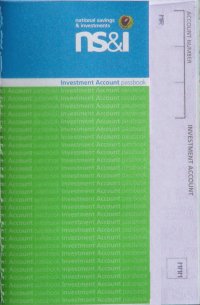 My parents were asking for a passbook account for their grandchildren as they aren’t keen on card based accounts.
Almost all accounts these days are card or internet based and the initial couple that I came across weren’t great as the building societies concerned didn’t have that many branches. Finally, I settled on the National Savings Investment Account which only requires a £20 deposit to open and also pays interest gross at quite a reasonable rate.
Opening it is a little peculiar as the Post Office branch doesn’t ask for any proof of ID or address and instead National Savings do the whole lot electronically. That worried me a little as I wasn’t sure that we’d turn up on their records but the books have arrived so we must do. Even stranger though is that they didn’t ask for any proof of ID from the children (normally you’re asked for a birth certificate) and one of ours was born in France so I can’t seem him appearing on any UK records.
Anyway, my parents are happy that they’ve a book for the grandchildren.
Copyright © 2004-2014 by Foreign Perspectives. All rights reserved.Taking your holiday money: using credit and charge cards
 Everyone will tell you that credit cards are the thing to use on holiday and they are, most of the time.
The problems with credit cards are that they’re not always accepted, how you get charged depends on how you use them and you can end up with unexpected shocks when you return home and find all the charges you’ve racked up. That said, you’d be very unwise to go on holiday without one.
Credit and charge cards operate in much the same way and the only practical differences are that charge card bills are supposed to be repaid in full at the end of the month and that, usually, they don’t tell you what your credit limit is with a charge card. Don’t believe those stories of charge cards coming with no limit: there is one, it’s just that usually they don’t tell you what it is.
For holiday purposes there are really only five international-use versions that you could reasonably expect to be able to use abroad. By far the most common are Mastercard and Visa which are accepted pretty much everywhere that accepts any card. One thing to watch is that acceptance of both is not universal nor are both equally accepted in all countries: usually Visa is the best to go with if you’re only taking one but in some countries Mastercard is much more widely accepted and shops that accept one do not always accept the other.
Next up is American Express which is widely accepted in America, Canada and the United Kingdom. Outside those three you would be very unwise to try to use it as your only card. The one big advantage it has is that you can get the card replaced if it’s stolen abroad although you may need to trek quite a bit to find the nearest American Express office where they can do that for you.
Finally there are Diners’ Club and JCB. On the whole, it’s not worth considering Diners Club as the acceptance rate is just far too low. JCB is widely accepted in places where you find Japanese tourists but you’d be better going with Mastercard or Visa as anywhere that accepts JCB will accept them too.
Discover isn’t accepted outside North America. Also worth noting is that cards issued in America or by an American owned bank anywhere are not accepted in Cuba or Vietnam. This obviously includes MBNA (owned by Bank of America) who issue a wide range of affinity cards from their various subsidiaries around the world: check your card agreement to see who is really behind it as it doesn’t always say on the card.
Note that acceptance of cards is neither universal nor universally practical. If you are travelling to countries off the tourist routes you can find that cards aren’t accepted or are only accepted in widely dispersed locations. For example, in India I found that using cards simply wasn’t practical and one family that stayed with us found extreme difficulty in using their American Express card in France (the only card they’d brought) as it’s accepted by less than 10% of the banks and few hotels. The easiest way to check coverage is to look at the Visa or Mastercard sites.
Where these cards really come into their own is in booking hotels and renting cars. You usually can’t guarantee a hotel reservation without having a credit card and you can’t rent a car without one either. Outside of those they can be amongst the cheapest means of getting foreign currency available to you. I say “can be” because you need to know how the banks charge you for using them first.
Bank charges on credit cards come in several basic forms. First, there is the interest that they charge on the credit; if you pay your balance in full each month the majority of cards don’t charge any interest. Some very low rate cards charge from the time of purchase even if you pay in full so check if your rate seems unusually low. Second, they charge transaction fees when you use the card to get cash and will usually charge interest from the date of withdrawal. Typically these fees are around 2% with a minimum charge of £2/$2 per transaction therefore it’s best to withdraw amounts of £100/$100 to minimise this charge. In most cases, there is no transaction charge when you buy things using the card so it’s better to do that instead of withdrawing cash. Thirdly, they usually apply a foreign currency charge which is typically around 3% (no minimum). And, of course, there may be an annual fee for having the card.
Despite all that, it’s still usually cheaper to get cash on a card than to buy travellers cheques as your cost will typically be around 5% max compared to the 7% or so for travellers cheques.
Downsides are basically those charges but, if you’re careful, you can minimise them. For those living in the UK, a Nationwide credit card eliminates all but the cash withdrawal charges and if you’re in the American military a USAA card works in much the same way and CapitalOne in America also issues cards with no foreign exchange charge.
This is part of a little series on travel money which has already covered taking cash and will be covering debit cards, cash cards, prepaid cards and what to do when (and it will be when) your cards are stolen.
Copyright © 2004-2014 by Foreign Perspectives. All rights reserved.

