Archive for the ‘Business’ Category
 Posted in
Merchant accounts to accept credit cards
 August 13th, 2008 |
  Author:
 One of the first shocks that you get when you start your own business is the extra cost of business accounts. Whilst the list of charges for personal accounts is usually fairly short, there seem to be untold numbers of things that banks feel the need to charge you for as a business.
Now, you would sort-of expect that they would charge you if you’re depositing large amounts of cash in that there’s obviously work involved in handling it. You probably also know that they charge a percentage of your credit card sales too and that there’d be a charge for the credit card terminal too. But setting up the terminal? Providing the software for it? Surely not?
Well, if you plan on taking everything from your own bank, yes, you probably will be charged for setting up the terminal and you probably will be charged for the software required to run the thing too (anything up to $500). Not only that, but try accepting card payments online and you’re potentially talking another $500 for the software that you’ll need to accept those payments too.
That’s just for the standard Mastercard and Visa acceptances too. Add American Express or anything else and you add to your costs yet again. Even commonly used things such as the ability to process customer not present transactions is generally seen as another opportunity to charge you.
What the bank won’t be too upfront about telling you is that you can get a merchant account from a separate organization. There are increasing numbers of these outfits around and the market competition is driving prices down with the likes of First Data providing free setup, free point of sale software and 24/7 service (something that, quite surprisingly, isn’t always provided by the banks) and things that you might expect to be standard but usually are billable such as reprogramming of the terminal.
Copyright © 2004-2014 by Foreign Perspectives. All rights reserved.
Selling your house really, really fast
Whilst I haven’t had to sell my home in the UK, the rise in interest rates has landed large numbers of people in the situation where they have loads of equity in their house but not enough money to pay the mortgage on it.
You can end up in that situation extremely quickly so it’s often the case that you find one month you can cope and the next you can’t. If that’s happened, then you need to do something about getting cash quickly.
Likewise, if your house has been sitting on the market for a while and you’re now living somewhere else, you can easily find that you need to get the money fast.
If this has happened there are now a number of outfits that will buy your house in as little as seven days. Yes, just a week!
Copyright © 2004-2014 by Foreign Perspectives. All rights reserved.When can we checkin?
That’s an obvious question to ask but, of course, most people know roughly what the answer will be for hotels in general ie after lunch to late evening.
In fact, we state that it’s from 3pm to 10pm although there’s usually some flexibility at either end of that time. So, for example, we can normally let people check in from around noon if they let us know in advance. Similarly, whilst we officially close the office at 10pm it generally takes us ’til around 11pm to actually get everything locked up.
However, despite us being clear on the hours, we still get people saying that they’ll be arriving at 1am or 5am now and again. Historically the 1am people have rarely made it on schedule so we routinely reply that their reservation has been cancelled.
The 5am people are always Parisiens who have booked “Saturday” and are planning on spending the entire weekend in the south of France but only paying for one day in a hotel. It takes quite some time to explain to them that actually hotels are booked by the night and if they want in at 5am on Saturday then they’re going to have to book Friday too or the room won’t be available ’til noon at the earliest.
Anyway, I’m sitting now for someone who should have been here some hours ago and will be billing them as a noshow once I finish off this post.
Copyright © 2004-2014 by Foreign Perspectives. All rights reserved.A passbook account for the grandchildren
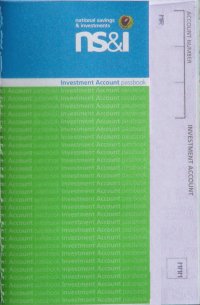 My parents were asking for a passbook account for their grandchildren as they aren’t keen on card based accounts.
Almost all accounts these days are card or internet based and the initial couple that I came across weren’t great as the building societies concerned didn’t have that many branches. Finally, I settled on the National Savings Investment Account which only requires a £20 deposit to open and also pays interest gross at quite a reasonable rate.
Opening it is a little peculiar as the Post Office branch doesn’t ask for any proof of ID or address and instead National Savings do the whole lot electronically. That worried me a little as I wasn’t sure that we’d turn up on their records but the books have arrived so we must do. Even stranger though is that they didn’t ask for any proof of ID from the children (normally you’re asked for a birth certificate) and one of ours was born in France so I can’t seem him appearing on any UK records.
Anyway, my parents are happy that they’ve a book for the grandchildren.
Copyright © 2004-2014 by Foreign Perspectives. All rights reserved.Eh? What?
As part of the business of being customer friendly we’ve local rate or tollfree numbers for a few countries which can sometimes result in very confusing phone calls from the sheer number of different phone numbers that we have.
For instance, now and again we get a little run of phone calls for some garden centre in America because we’ve a tollfree number that’s similar to theirs. So, any time that they run a promotion we’re sure to know about it just as soon as it hits the streets.
We’ve also quite a nice local rate number for the UK which gets a fair number of duff calls too now and again. For reasons which escape me, these particular callers take a bit of convincing that really we’re not who they want to speak to.
And then there’s the French who seem to assume that all phone numbers are also the fax number and vice versa so we get quite a raft of faxes on our normal phone number and a surprising number of people calling on the fax number. What they seem completely unable to grasp is that in fact our real fax number is actually a UK number that forwards the “faxes” to our e-mail.
Copyright © 2004-2014 by Foreign Perspectives. All rights reserved.

