Archive for the ‘Commentary’ Category
 Posted in
How often do you change e-mail addresses?
 January 9th, 2008 |
  Author:
 All the mobile phone companies offer to move your existing number from another provider thus letting you retain your existing number.
Unfortunately, that service doesn’t yet exist for e-mail addresses. That wouldn’t be too bad but many people tend to just use the e-mail address provided by their ISP so if they move house or change ISP you lose touch with them. Others seem to flit from one freebie e-mail provider to another pretty much all the time thus making their e-mail address pretty much useless.
It doesn’t need to be like that though. All you need to do is to buy a domain (costing as little as £5/year) which’ll come with an e-mail facility. This frees you forever from being tied to an ISP and telling people that you’ve changed your e-mail.
Which is how come I’ve had the same e-mail address for ten years now.
Copyright © 2004-2014 by Foreign Perspectives. All rights reserved.Bargain house prices
If you’re looking for a house in the UK at the moment, it’s pretty much the ideal time with lots of bargains around.
Usually to get a “bargain” you need to look for something well off the beaten track or needing some work done to it but at the moment that, for the most part, doesn’t apply. Whereas normally prices in the UK are usually firm, at the moment many people are open to negotiation so you’re quite likely to get an offer lower than the asking price accepted. Obviously not ridiculously low but you can probably start around 10% below the asking price.
Getting a mortgage is a different matter though as the criteria have been tightened up somewhat of late but if you’re able to bargain down the seller a little then the loan % should also go down and thereby make it easier for you to make that bargain purchase.
Copyright © 2004-2014 by Foreign Perspectives. All rights reserved.What if your “time traveller” made a prediction and it didn’t pan out?
Let’s suppose our hypothetical time traveller was by chance able to make a really concrete prediction about what was going to happen say, next Tuesday, and it didn’t happen.
That would prove that he wasn’t from the future after all, wouldn’t it?
It’s not quite so simple as that. If he predicted that World War 3 was going to happen next Tuesday then you’re definitely dealing with a hoaxer. Major events like that which would have a considerable lead-up to them would be fairly definitive evidence that it was a hoaxer that you were talking to. On the other hand, if World War 3 was actually going to happen next Tuesday then chances are that you’d know about it too: such things rarely happen without a lot of preceeding events pointing to them happening well in advance of the event itself.
But what about more minor things? Sports results are a big iffy. For example, if you were to place large bets on the basis of what your “time traveller” said then that could by itself affect the outcome of the game.
And, that’s the problem really. Large scale events would have lots of preceeding smaller events leading up to them and thereby be largely predictable by many people whereas smaller scale events could be influenced by the very fact of the time traveller telling you about them.
Copyright © 2004-2014 by Foreign Perspectives. All rights reserved.Still talking to your time traveller?
Sure you’d know by his accent, dialect or language, wouldn’t you. After all, it’s only in science fiction programmes that everyone speaks English, isn’t it?
If he was from hundreds of years in the future chances are that the “English” that he’d speak (time travellers are always male, aren’t they?) would be a little different. However, early time travellers are probably only to go back a few decades or perhaps a century so the language won’t have changed that much. After all, you’d be able to understand someone from 1908 no problem, wouldn’t you?
To be fair, if you went back to 1908 you’d have a fair number of words that you’d be using which didn’t exist in the same sense as they did in 1908. Not that many completely new words mind you. Computers were around in 1908, it’s just that they were people who did calculations rather than machines in those days. An “inter-net” would be some kind of fishing net I imagine. Television is one of the few words that are genuinely new which didn’t exist back then.
However, John Titor used the Internet to send his messages so there was no issue of an accent or really of a dialect for that matter as both are largely confined to the spoken word.
What you might notice would be different ways of phasing things. For example, going back to say that “I called Helen” in 1908 would mean that you shouted out to her, not that you phoned her but then the difference in that is only obvious to us in 2008 and wouldn’t be obvious if you used the phrase in 1908. I suspect that in reality this kind of difference would be very difficult to pick up.
Copyright © 2004-2014 by Foreign Perspectives. All rights reserved.Would you believe someone that said they were a time traveller?
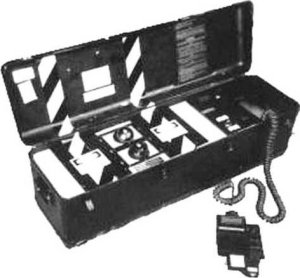 Seeing as Einsteins theories allow for time travel then sooner or later you might come across one but how would they be able to prove to you that they were from the future?
In fact, in November 2000 the first claimant to the title emerged on the Time Travel Institute forums and continued on until March 2001. Supposedly he had been sent back to retrieve an IBM 5100 computer to sort out the next “Year 2000” computer problem in 2038 but let’s leave the exact reasons aside for now because they’re not relevant to my point here.
In the end he was neither able to prove that he was from the future nor were those that were involved in the discussions really able to disprove it. If you think about it, it would be quite difficult to prove that someone wasn’t from the future whilst you were talking with them. After all, they’re hardly likely to be able to come up with next week’s lottery results: who can remember even last weeks? And, that’s the fundamental problem: any time traveller is likely to have come back tens if not hundreds of years and therefore is very unlikely to have sufficiently detailed knowledge of the time that they find themselves in.
OK, so chances are that you couldn’t prove that someone wasn’t from the future right away, but surely they’d know “stuff”, wouldn’t they? Like how their time machine worked for instance? Well, do you know how your car engine works? In general terms, perhaps, but few people know in real detail unless they’re car mechanics. Of course, that’s the problem with the John Titor chronicles: he couldn’t be caught out on operational details about the time machine because he just didn’t know them.
Don’t forget too that the first real time travellers are likely to be in the test pilot field rather than historians so they’ll probably not know much about the present time unless either it’s far enough in the past to have been taught as history or it’s close enough that they’ve lived through it. I suspect that if either of those apply then the knowledge they’d have about their new time would be fairly sketchy.
So how could you tell? Well, you’d need to ask about major events that were going to happen and then simply wait to see if they did. Unfortunately, most of the time I suspect your time traveller would have long since gone by the time any event that they remembered occured.
Copyright © 2004-2014 by Foreign Perspectives. All rights reserved.

