Archive for the ‘Places’ Category
 Posted in
Thinking of buying a gite in France?
 June 18th, 2009 |
  Author:
  When people think of moving to France their first thought as to how to generate an income is to buy a gite complex and rent it out to people from back home.
It sounds like an idyllic lifestyle, doesn’t it? You work one day a week and the rest of the week you can be sunbathing by the pool.
The snag is that you need to wash all the sheets and towels and carry out maintenance work during the week. OK, so two days work and five at the pool? In theory, you might get away with that though, of course, the guests will be using the pool too and, usually, expect you to do things for them like organise tours or the area, tell them all the best places to go and so on.
What’s frequently forgotten about in all this is the financials that go along with this lifestyle. From a typical six or seven person gite you can probably get around 700€ a week in the peak season. That size of gite equates to a small three bedroom house in size and, of course, amount of work to look after. In reality most people aim for a gite complex of around four or five gites. On the whole, you’ll eventually reach an occupancy of around ten weeks per year for the gites which translates into around 35,000€ a year of an income.
However, there’s the matter of expenses to consider. Bearing in mind that you only have four or five hours to reset the gite between guests you’ll end up hiring a cleaner to help you which eats into the income somewhat and you may need someone to look after the pool. There’s also the business of maintenance: unlike a normal house rental you’re getting a new set of tenants virtually every week and that tends to be quite hard on the furnishings so you’ll need to renew at least some items pretty much every year.
Oh, and don’t forget the taxes!
Copyright © 2004-2014 by Foreign Perspectives. All rights reserved.Hawaii – the ideal holiday location
 Hawaii is probably the only place in the world that says “holiday” in every sense of the word.
There doesn’t seem to be anyone who it wouldn’t be suitable for in terms of fulfilling their holiday interests. Want a surf beach? It’s surrounded by them. Just want to crash on the beach? There are loads of quiet ones that’ll let you do that too. Fancy seeing a little of the cultures from the Pacific islands? No problem: the students from the Mormon university run a fantastic cultural centre that’ll let you do just that.
That’s just on Oahu too…. the other islands offer even more choice for you and all surrounded by beautiful and spectacular coves as you can see.
With all those advantages Hawaiian vacations don’t come in one-size-fits-all. Sure, you could do the standard flight and hotel deal but you’ll get much more out of your Hawaiian vacation if you choose a vacation rental property as your base.
With the massive numbers of tourists arriving in the islands, Hawaiian Local Travel Information comes in considerable volume so it’s easy to be overwhelmed by it all but then that’s just a good excuse to go back again next year…
Copyright © 2004-2014 by Foreign Perspectives. All rights reserved.Getting into the United Kingdom legally without visas and residence permits
No, not as an asylum seeker!
We’re following European Directive 2004/38/EC which is the directive which gives European citizens and their family members and dependants the right move to any other European country. In general terms to take advantage of this directive you need to be moving your family from one country to another. For example, if you are only British and are living in the UK then you can’t use this directive to get any residence rights for a non-European wife. However, in the special case of those who count as “people of Northern Ireland” it’s possible for a British citizen to exercise these rights by requiring the UK authorities to consider them to be Irish (see the British-Irish agreement).
Who counts as a “family member or dependant”? Basically it’s:
- the European citizen plus their spouse (or registered partner or partner in a durable [2 years or more] relationship) and
- the direct descendants of either one up to 21 (or older if they are dependant on the parent) and
- the dependant direct relatives in the ascending line of either (ie parents, grandparents, etc.) and
- any other dependant relatives or members of the household of the European citizen.
Which essentially translates as anyone who lives in the house of the European citizen in the country from which they are moving, regardless of their nationality (which paraphrases Articles 2 & 3 of the directive).Most people think they must have a visa to move to another country but if you are one of the people covered by the above paragraph then in fact you don’t courtesy of Article 5, paragraph 4 which lets you prove “by other means” that you are covered by this directive. For example, in our own case Wendy has an expired European Residence Permit in her passport thus proving that the directive applies to her so she doesn’t need a visa and neither does she need to go down the “Non-European citizen” queues at immigration control even though she’s Australian.
Now you might think that you’re sure to need a residence permit but even that’s not the case because Article 25, paragraph 1 also has the option to “prove by other means” entitlement to the rights granted under this directive and specifically forbids possession of a residence permit to be used as a precondition for the exercise of any rights or completion of any administrative formality. Which means that, in practice, you never need to have the residence permit.
But, what rights does this directive actually give? Well, in practical terms it translates as giving anyone covered by the directive almost all the rights that a national of the country would have with limitations only in areas such as national security (eg you probably couldn’t work as a diplomat) and voting (although the European citizen can vote in local and European elections). Thus the authorities are required to treat Wendy as though she were British and had always been British.
That’s the theory, but how does it work out in practice. Well, Wendy doesn’t get any UK stamps in her passport these days and avoids the massive queues at some airports which simplifies our lives no end as we can all go through the “EU Citizen” immigration queues. She already has her National Insurance number from when we were here before but temporary ones are allocated once you start work in the UK if you don’t have one already. One current complication remains in connection with the doctor (and I suspect the dentist) which is that although the doctor’s office don’t have any problem in treating her, the Central Services Agency (CSA) are still asking for copies of her visa and residence permit which, of course, we can’t provide as we have neither and we just found out this morning that because of that they’ve told the doctor to take her off his list. That’s not really a big problem as worst case scenario from the doctor’s office end is that we fill in a temporary resident form every time we go to the doctor. It does have a potentially major upside in that as the CSA are breaking the law we could get quite a sizeable compensation payment…
So, overall, an easy, legal and free way to live & work in the UK.
Copyright © 2004-2014 by Foreign Perspectives. All rights reserved.Where would YOU go in an RV?
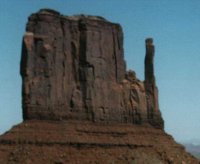 For me there can only be one place to go and that’s the wide open plains of the American wild west. Yup, the big country.
Motorhomes aren’t things to confine to towns and cities but rather to use on the wide open road and few places get more wide open than the likes of Arizona and Texas. OK, it’s a bit of a struggle for the big beasts to get up some of the hills around the canyons but it’s the modern day covered wagon and the old timers had a bit of a struggle up the very same mountain ranges.
Monument valley is, of course, John Wayne country. That’s the backdrop that you’ll see in countless westerns and even today you can park your rig in one of the remaining indian emcampments. It’s miles from anywhere too so you get to see the stars in the night sky just as the old-time pioneers did.
Move a little further south and you can even tie your “hoss” up right in the centre of Tombstone just a little ways down from the OK Corral. Next morning you can even stroll down the very same wooden sideway that Wyatt Earp, Doc Holliday and the Clancys did because that section of Tombstone has been preserved just the way it was in those days.
So where would YOU take your RV?
Copyright © 2004-2014 by Foreign Perspectives. All rights reserved.A New York holiday
 It’s been a long, long time since I was in New York and so it’s time that I was starting to consider it for a future trip once again.
Funnily enough a flight to New York these days costs much the same as it did when I went the last time way back in the 1980s and, if you’re careful, you can even get it cheaper than it was then! Not only that, but with the dollar being so low (or is it the pound so high?), even the hotels are pretty much at the same prices so overall the holiday would easily come out well below the price from 20 years back.
The city has changed a lot over that time. For one thing the Statue of Liberty isn’t shrouded in scaffolding as it was when I was there, the Twin Towers aren’t there any more and I gather that the city has been cleaned up considerably too thanks to a series of zero tolerance programmes over the intervening years.
Shopping is a “big thing” in any New York trip of course. Sadly, they still don’t actually do breakfast at Tiffany’s but it’s a beautiful store to wander around and whilst there’s an awful lot of stuff there at serious prices there are also many items that you can pick up at very sensible prices. Aside from there, you shouldn’t miss the likes of Macy’s.
Given the prices of both flights and hotels, it’s definitely a great time to be considering a trip to New York.
Copyright © 2004-2014 by Foreign Perspectives. All rights reserved.

