Archive for the ‘Places’ Category
 Posted in
The summer activities are opening up
 May 14th, 2007 |
  Author:
 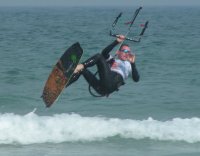 Normally the French beach resorts basically close in mid-September and don’t fully reopen until the following June but the season has been expanding in recent years.
When we went out to Canet Plage yesterday we were pleasantly surprised to find just about everything had been opened up. In fact, the resort was even more lively than it usually is most of the Summer season courtesy of a two day kite surfing run by the Canet Plage kite surfing club.
It remains a different story during the week though as most things can be expected to be closed, with the possible exception of the coming week which is a major holiday in France.
This is part of our guide to the Pyrenees.
Copyright © 2004-2014 by Foreign Perspectives. All rights reserved.Americans in France
Although your first thought might be that Americans in France would end up, for the most part, in the same areas of France as the Brits, this isn’t actually the case so funnily enough there is very little interaction between the two communities.
Generally speaking, the Brits end up in Brittany/Normandy, Dordogne/Loire, and Provence with the Americans largely confined to Paris, though obviously there are a lot of exceptions to this.
One of the more complete sites is Americans in France which seems to be a fairly complete reference guide for Americans aiming to move over here. Interestingly for me is that they still need to declare their income to the US tax authorities.
Of interest to the parents amongst us is the list of bilingual schools. You might think that the list on the site “must” be too short. There are bound to be more bilingual schools in France, aren’t there? Well, there might be a few more but there aren’t an awful lot more which is something you may want to factor in when you’re considering where in France you might want to settle. If you don’t arrange bilingual teaching for your children from about age 11-18, they will not be fluent English speakers and that will set them at a major disadvantage in their future life.
Not listed on the site are the international schools though there aren’t many of these either and bilingual is the way to go. International schools don’t raise children to fluency in both languages as you might expect.
Anyway, lots to see on the site.
Copyright © 2004-2014 by Foreign Perspectives. All rights reserved.Peculiariaties of French medicine

You might think that medical treatment in France would be pretty much the same as it is elsewhere in the world once you get to the point of visiting the doctor, but it isn’t.
Certainly there are the obvious differences in how the various healthcare schemes are run. So, in the UK everything is free but there are waiting lists. In France, everything costs but there aren’t any waiting lists.
Expectations of the patients are quite different too. For example, because the French like to come away from the doctor with something after their visit, the number of medicines prescribed is massive. James had bronchitus last year and in the UK he’d have had a single bottle of medicine yet in France he ended up with that bottle plus tablets plus an inhaler plus appointments at the physiotherapist. Did he get better faster though? Well, no, so there wasn’t really any point in all the additional treatments.
The doctors have no consideration of any modesty that you might have either so almost always it’s “strip off, yes, everything” which is something to bear in mind. Such differences have resulted in there being training sessions for doctors in areas with a high brit expat population.
I wonder though if Doctor Bobo realises that his potential brit clientele is a good deal smaller than it might be if he didn’t advertise himself as a clown?
Copyright © 2004-2014 by Foreign Perspectives. All rights reserved.So it’s Sarkozy: what now for France?
The margin was relatively slim (53/47) but France has, much to my surprise, chosen the president that it needs at this time.
His first hundred days are likely to be turbulent ones and I suspect that last nights riots across France are merely a taster of things to come. Many of his policies seem to run against the deep socialist grain of French thought and practices.
The 35 hour week is to be reviewed. That was one of the planks of job creation from the socialist era. Reduce the time that anyone is allowed to work and everyone will have more work, won’t they? Well, perhaps in theory if you drop the permitted working hours by 10% you might think that employers will need 10% more people to get through the work but that’s only going to work with cuts much larger than 10%. As is clear everywhere else in the world, semi-parttime workers get through just as much work as full-time workers do.
Immigration rules are to be tightened up. This one seems pretty strange coming from the son of immigrants. The counterpart to this is that he seems likely to work with the countries in northern Africa to form a kind of African Union to help improve the economies of those countries.
France is to become a little bit more capitalist too as he plans to reduce the regulations on businesses to make the job creation process much easier. Taxes too are to be reduced to improve the incentive to work.
Will he have the strength of character to follow through on these reforms is the biggest question though. I think he will: he seems to have that inner strength that is so necessary to do it.
Copyright © 2004-2014 by Foreign Perspectives. All rights reserved.The war graves in France
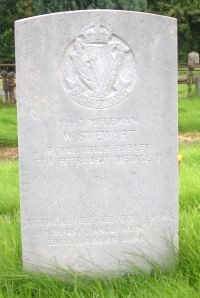 I find the cemeteries in France really fascinating.
Naturally there are loads of military ones around the sites of past battles in the two world wars. The second world war ones up around the Normandy beaches are perhaps the most impressive in terms of the sheer scale of carnage that they represent. However, in addition to those there are many much smaller WW1 cemetries dotted around the landscape. The area of the Somme has untold numbers of these from the large Thiepval and numerous smaller versions in that area from the Ulster Tower to relatively small Australian ones.
One thing that they all have in common is that every single grave in them is still well tended for, no matter how long ago the death occured. As we were going through the Somme cemeteries last year, every one looked as though it was only filled a few weeks ago. Don’t forget that these graves are getting on for 100 years old by now too. The reason for this is simple of course: the Commonwealth War Graves Commission really live up to the phrase “they shall not be forgotten” and are constantly caring for the graveyards and refurbishing the headstones.
Of course, they don’t just look after the major graveyards and the photo here is that of the brother of my grandfather sitting in a cemetery in Lisburn, Northern Ireland, one of a couple of dozen or so scattered around that particular graveyard.
Copyright © 2004-2014 by Foreign Perspectives. All rights reserved.

