Archive for the ‘Science & Technology’ Category
 Posted in
Duff validation checks
 November 6th, 2007 |
  Author:
 Don’t you just hate it when there’s some daft validation check applied to what you want to enter in a form?
Despite many years of crazy assumptions being made by programmers and analysts, they still happen.
France, as always, heads the list though. It’s impossible to enter the date you got your driving license if it was before you were 18 as that’s the earliest you can get it in France. Applying for a job? Well, you’ll need a reference number to do it that you can’t get until after you’ve got a job!
In a similar category there’s the seemingly pathetic software testing that’s done these days. The reason why there haven’t been any posts from PayPerPost here lately is because they’ve updated their software and it’s not currently possible to submit entries to them! I suspect that the advertisers are having problems with them too as whilst it’s normally 200+ opportunities to select from, there’s only about 100 on at the moment.
Copyright © 2004-2014 by Foreign Perspectives. All rights reserved.The problem with GPS…
It doesn’t always work as such.
Oh, it’ll tell you where you are alright and point you in a direction that’ll get you where you want to go but the problem is that in some areas of which ours is one, the roads that it sends you down are the windy ones and anyone using it to reach us from the south always adds an hour or two to their journey because of this.
The problem is that once you get dependent on a technology like that you tend not to have a fall-back ie maps in this case. So, we found that our Danish guests didn’t arrive at 7pm but were much closer to 9pm and had been following a very “interesting” route to get to us, despite them having been here before.
Copyright © 2004-2014 by Foreign Perspectives. All rights reserved.Digitizers
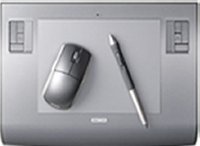 I’ve been planning on upgrading the maps on our range of listings sites but hunting around the various places providing maps for websites quickly made me realise that it would cost far, far too much to buy the maps that I’d need. In that market, $100 per map is a typical price and I need something like 5 to 10 maps per country that I extend into.
In that paper maps are more like $5 a country I figured that going down the digitizer route was the way to go. Not only would this be substantially cheaper but I’d be able to add features to the various maps reasonably easily eg tourist attractions or specific towns and villages.
So, I started looking for a digitizer. Although these have been around for quite a while, it’s a fairly specialised device so you need to search in a reasonably large computer shop to find even one of them and that one is usually at the toy end of the range. Online, it is naturally different but the prices are something else or at least the range certainly is.
You can get an A4 tablet for anything from $75 or so through to $1000 for a start. Now, in practice although A4 sounds like what you’d want an A4 surface makes for a very large digitizer and it would appear most people go for the A5 size and for the most part the Wacom brand. However, even that’s not a whole lot of narrowing down as Wacom produce a whole heap of the things, many of which are very close in price.
In this particular market you don’t always seem to get what you pay for in that the price ranges of products aimed at the home and professional markets overlap considerably. So, for example, of the Wacom Graphire Wireless A5 Tablet and the Wacom Intuos3 A5 Tablet, either one can be the most expensive depending on the store yet reading the specs, the Intuos is clearly the one to go for.
Now, all I need to do is save up for it ‘cos I figured that it would be more like $50 than $300!
Copyright © 2004-2014 by Foreign Perspectives. All rights reserved.Visiting CERN
To be honest, with all the security things on these days, I figured that visits to CERN would have been cancelled but apparently not.
In fact, they seem pretty keen on getting people to go. Well, one aspect of that is that CERN costs a whole heap of public money and as with the likes of NASA they’re very keen to show that the money is being well spent.
That would ordinarily be particularly difficult for CERN in that the stuff that they do is very much into seriously technical high energy physics which, let’s face it, is far removed from most peoples’ lives. On the other hand, how could you put a value on the invention of the World Wide Web? The money that’s been generated by that single invention would more than likely repay all the money that’s been invested in CERN from the day it opened.
They go a little overboard on the visits in that they take a half day vs the cursory hour or so in normal places. That in turn means that they can’t have people just dropping in for a visit so if you book one, expect a wait of anything up to six months between your application and when they can show you around.
Oh, and they do show you around too. You get to see at least one of the experimental areas during your visit.
Copyright © 2004-2014 by Foreign Perspectives. All rights reserved.The peculiar keyboards in France
Everywhere you go in the world today you’ll find a keyboard in the family QWERTY layout. Except in France.
That’s because the French style keyboard that was developed by Dvorak is a second generation keyboard design.
Way back in the early days of typewriters, the keys jammed frequently and to solve this problem the manufacturers adopted the now familiar QWERTY layout to slow down the speed of the earliest typists. Although the early problems were solved quickly enough, the design stuck across the world despite all attempts to update it with a more logical layout.
Meanwhile though in France, Dvorak came along after those initial problems were solved and developed a keyboard layout which equally balances the workload across both hands and thereby considerably speeds up typing. However, although it would obviously be a doddle to change over to that layout these days by simply changing the keys around and using a different driver, I suspect that we’ll be stuck with QWERTY until the day comes when we’re not using keyboards anymore.
Copyright © 2004-2014 by Foreign Perspectives. All rights reserved.

