At last a decision on our new TV
 April 10th, 2009 |
  Author:
 After considerable debate we decided against what seemed like the best bargain around, namely the 37″ LG2000 essentially because it’s out of stock locally, can take up to a week to arrive with anything up to £60 delivery charge and it’s only a 720p set.
So, instead of paying £399 for that we’ve gone for the 42″ LG5010 at £549 and will be off to collect that once we get the old 28″ JVC CRT style monster into the car (the store does recycling).
Why that one? Well, it’s 1080p ie full HD, it’s 5″ larger and it’s in stock locally. In reality full HD doesn’t really matter a whole lot to us right now as the only thing it will directly affect is our full HD camcorder but I imagine that over the years we’ll accumulate a whole bunch more full HD programming to make use of the extra resolution. I suppose in principle we could go for Sky’s full HD offering right now but I’m too stingy to pay for what seems like a lot to pay for very little programming.
Still, at least this telly should keep us going ’til they start rolling out 3D…
Copyright © 2004-2014 by Foreign Perspectives. All rights reserved. Posted in
Dredging up the memories…
One of the slightly peculiar effects of my five year absence is that it takes a while for the name of some people to come to mind that I’ve seen in the local supermarkets.
It’s not that I didn’t recognise Colin [test to see if he’s really reading this!] pretty much instantly, but that it took me AGES to remember his name! Is it just the five year gap, or creeping senility? Funnily enough I remembered David J’s name almost the instant I saw him even though I’ve worked a whole lot more with Colin over the years. Bryan’s a lot easier to remember of course in that I seem to have been constantly bumping into him in Tescos or Sainsburys every time that I’ve been over here.
Anyway, for Colin’s benefit, yes I’m back in NI. Why we’re back right now is down to a whole bunch of reasons that meant early in 2009 was always going to be the best time logistically for us to return and although it might seem a bit of a sudden decision, in fact we’d been aiming to be here since something like two and a bit years ago.
Copyright © 2004-2014 by Foreign Perspectives. All rights reserved.Is there any time when it’s simple to buy a TV?
Although they’ve one of the most frequently used pieces of technology around for a long time, most people don’t buy a new TV terribly often.
However, it always seems to be close to the worst time to buy one no matter when you’re looking for one, doesn’t it? For a long time it was safe enough buying TVs: from the 1970s when colour came out in the UK it was OK to pick up a 405 line set for getting on for 20 years until the 405 line broadcasts were turned off. Even within that period it was fine for quite some time if you bought a 625 line model as they were fine well into the 1990s.
These days it’s a whole different story though. Not only have we moved from the simple 625 line broadcasts in their 4:3 aspect ratio to the more common widescreen version but we’re also getting into the digital transmission era, moving to flatscreen technology and high definition all at the same time.
Aside from the flatscreens being a whole lot lighter than their predecessors, there isn’t really a whole lot going for them right now in that the colour on the old style CRT versions is generally better and you don’t get those annoying little coloured spots that are found on flatscreen versions. Most flatscreens come with digital tuners as standard though which is something of a plus in that the analogue signals are gradually being turned off.
What about HD though? Well, that comes in two versions: the real thing and “HD ready” which means that it’s not really HD at all. Going for true HD seriously bumps up the cost though and since there aren’t really a whole lot of HD broadcasts around at the moment, it seems to make more sense to go for an HD ready TV now with a view to replacing it in four or five years time when the price of true HD will have dropped and the number of HD programmes should have gone up a lot.
Of course, by then chances are the first of the 3D TVs will be starting to drop to relatively sensible prices….
Copyright © 2004-2014 by Foreign Perspectives. All rights reserved.Building a support network for the psychology course
One of the essential things to do early on in starting an Open University course is to get yourself into a study group.
Although there are regular tutorials associated with the course there tend to be quite a lot of things that don’t come up during the tutorials for one reason or another but which are often vital to your success on the course. Not all of these will be obvious at the off either. For example, one of the most useful things that I picked up early on in the French course was from just how extensive another student made his notes and what he was making notes on. Seeing just how extensive the notes of another student are has a great deal more impact than hearing at a tutorial that you should make notes.
Less tangible reasons at the start are the encouragement to keep going that you can get from other study group members. As an indication of how important that is, the only people who finished the French diploma were those who were in the study group three years earlier: everyone else dropped out along the way.
Then, there’s the magnification of sources that arises from having a number of people working on the problem. On Saturday for instance our group turned up four separate sets of notes on different aspects of the course.
Finally, there’s the reason that you joined the study group for in the first place… talking about the assignments!
Copyright © 2004-2014 by Foreign Perspectives. All rights reserved.Where would YOU go in an RV?
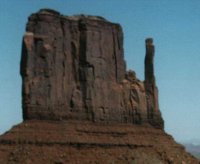 For me there can only be one place to go and that’s the wide open plains of the American wild west. Yup, the big country.
Motorhomes aren’t things to confine to towns and cities but rather to use on the wide open road and few places get more wide open than the likes of Arizona and Texas. OK, it’s a bit of a struggle for the big beasts to get up some of the hills around the canyons but it’s the modern day covered wagon and the old timers had a bit of a struggle up the very same mountain ranges.
Monument valley is, of course, John Wayne country. That’s the backdrop that you’ll see in countless westerns and even today you can park your rig in one of the remaining indian emcampments. It’s miles from anywhere too so you get to see the stars in the night sky just as the old-time pioneers did.
Move a little further south and you can even tie your “hoss” up right in the centre of Tombstone just a little ways down from the OK Corral. Next morning you can even stroll down the very same wooden sideway that Wyatt Earp, Doc Holliday and the Clancys did because that section of Tombstone has been preserved just the way it was in those days.
So where would YOU take your RV?
Copyright © 2004-2014 by Foreign Perspectives. All rights reserved.

