Would you believe someone that said they were a time traveller?
 January 8th, 2008 |
  Author:
  Seeing as Einsteins theories allow for time travel then sooner or later you might come across one but how would they be able to prove to you that they were from the future?
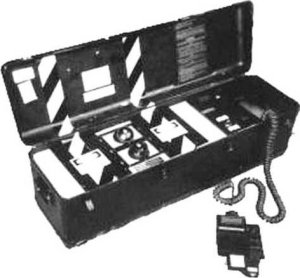
In fact, in November 2000 the first claimant to the title emerged on the Time Travel Institute forums and continued on until March 2001. Supposedly he had been sent back to retrieve an IBM 5100 computer to sort out the next “Year 2000” computer problem in 2038 but let’s leave the exact reasons aside for now because they’re not relevant to my point here.
In the end he was neither able to prove that he was from the future nor were those that were involved in the discussions really able to disprove it. If you think about it, it would be quite difficult to prove that someone wasn’t from the future whilst you were talking with them. After all, they’re hardly likely to be able to come up with next week’s lottery results: who can remember even last weeks? And, that’s the fundamental problem: any time traveller is likely to have come back tens if not hundreds of years and therefore is very unlikely to have sufficiently detailed knowledge of the time that they find themselves in.
OK, so chances are that you couldn’t prove that someone wasn’t from the future right away, but surely they’d know “stuff”, wouldn’t they? Like how their time machine worked for instance? Well, do you know how your car engine works? In general terms, perhaps, but few people know in real detail unless they’re car mechanics. Of course, that’s the problem with the John Titor chronicles: he couldn’t be caught out on operational details about the time machine because he just didn’t know them.
Don’t forget too that the first real time travellers are likely to be in the test pilot field rather than historians so they’ll probably not know much about the present time unless either it’s far enough in the past to have been taught as history or it’s close enough that they’ve lived through it. I suspect that if either of those apply then the knowledge they’d have about their new time would be fairly sketchy.
So how could you tell? Well, you’d need to ask about major events that were going to happen and then simply wait to see if they did. Unfortunately, most of the time I suspect your time traveller would have long since gone by the time any event that they remembered occured.
Copyright © 2004-2014 by Foreign Perspectives. All rights reserved. Posted in
University education free for all?
Distance learning has come along in leaps and bounds in recent years as more and more of it has moved online.
One interesting aspect of the online nature of present day distance learning is that once a course is developed, many aspects could be made available at no cost in that, aside from tutor involvement, it costs next to nothing to distribute an online course. As usual, the Open University is blazing the trail on this one by offering some of it’s courses via Open Learn.
You can’t, yet, get a university qualification from them via this route but then this is an experimental offering at the moment. What’s on offer are segments of courses that currently form part of various degree programmes that they offer so if you’re thinking of taking a course with them it’s worth having a look at Open Learn to see if part of that course is available.
Would anyone study, say, 20 hours if they weren’t going to get something tangible at the end of it? Well, a growing number of people are doing exactly that even though the scheme isn’t terribly widely publicised.
Copyright © 2004-2014 by Foreign Perspectives. All rights reserved.Is it “free” if you’re not charged for it?
Two years ago as I was promoting my free listings sites I received an interesting e-mail which demanded to know how I could possibly run the sites without charging for them.
In fact, it turned out to be from someone who was running a similar site which charged around £50/year for very similar listings to my own sites. That site happened to be up for sale and for a time I was quite interested in aquiring it but for various reasons that never came to pass.
One interesting point from that was that the profitability of his site was quite comparable to my own once you adjusted for the different number of entries on our respective sites. In fact, it appeared that the “free” model that I was using would actually be much more profitable than the charging model that he was using had simply taken over his database of expired subscriptions and put them on my own site as live “free” entries.
How can that be? Simply because I place adverts on my site whereas he didn’t and, of course, since my listings are “free” people go onto the site and never leave whereas he was in a treadmill each year to attract new entries to replace those that had decided not to renew. In fact, that lack of turnover means that my own sites will overtake the size of any comparable subscription based site sooner or later.
So are my sites free? I certainly don’t charge people for listings (though, for psychological reasons I quote a notional price). Yet I obviously get income from them so somebody is clearly paying.
In the real world there are usually limits to “free” services like this. The UK National Health Service has all kinds of problems in running “free” as people have a tendency to expect there to be no limits to what they should do, ignoring the fact that clearly the service isn’t free as it’s paid for in taxes. Yet, on the Internet, these limits don’t seem to apply: if I ever get to the point of having, say, 50000 entries on the sites it would cost little more to run than if I had 5000 entries.
Free, or rather ad-supported, seems to be the future for services on the Internet but I’m sure that many old-school types will continue to regard these with suspicion when compared to equivalent services which charge.
Copyright © 2004-2014 by Foreign Perspectives. All rights reserved.Back to school
It’s back to school today for James which means that we’ve to start getting up at a fixed time yet again.
One of the oddities about this business is that there are no regular hours at all. During the summer we generally need to be up no later than 7.30am each day and often need to stay around the office until after 11pm each night. Once we get outside the peak period though there starts to be periods of a day or two when we’ve nobody in and can lay in a while and over the winter you often get stretches of a week or more at a time when you can take it easy.
Well, perhaps “take it easy” isn’t the right description as we use those times sans guests to get various bits of maintenance done, to catch up with the administration and move more into our little empire of online activities. Still, ’tis nice not to have both the early start and late finish for a while even if it is a little muddied by school days.
Copyright © 2004-2014 by Foreign Perspectives. All rights reserved.Do you need to invest money in promoting your website?
As always, the answer is “it depends”.
If your website is one of the majors, the answer is “probably not”. Would it really make any difference if Amazon decided to spend another million dollars promoting their site? I think not. After all, there can’t be many people around who haven’t heard of them these days and realistically nobody is going to buy twice the number of books through them no matter how much they’ve promoted the site.
On the other hand, if you’re like most organisations, essentially average then it probably does make a difference. Unless your name is very well known then you do need to invest some money in getting your site into search engines and perhaps also through PPC programmes such as adwords. If you don’t do that you run the risk of becoming an also ran in your business niche which was the fate of many small bookshops having an online offering at the time Amazon was launched.
Finally, there’s the special case of start-up websites. If you don’t promote them, nobody will know about your super-duper new site. For these, what you need to to usually is to spend a little at the start to get your site into the search engines to begin with (usually under $50 is enough) and start higher level SEO investment three to six months later.
What you’ll find after a while though is that, regardless of your level of investment in promotion, the traffic on your sites will grow over time. In my own case this growth is roughly 3x year on year which keeps things at a manageable level for me: the growth rate that suits you may well be different of course.
Copyright © 2004-2014 by Foreign Perspectives. All rights reserved.

