Archive for March, 2007
 Posted in
Buying a house in France: part 13: housing: the buying process
 March 29th, 2007 |
  Author:
  In many ways, the house buying process in France is quite similar to that in the UK but there are important differences.
Once you’ve found a place, the first stage is to sign a Promis d’Achat (promise to buy). If the seller accepts this, then you have your house as they aren’t allowed to even show it to anyone else (ie no gazumping), subject to you following through with the later stages of the purchase, of course. Signing this commits you to buy the place at the agreed price but only commits the seller to sell to you if they accept this contract.
Since it commits you to buying, you MUST add a “subject to mortgage” clause if you plan on getting a mortgage for the purchase. The mortgage clause needs to include the bank that will be giving you the mortgage, the rate and the term of the mortgage so if you are hoping to get a French mortgage you’ll need to see the bank first. If you haven’t done so already, you should open a French bank account at this stage (links to the various banks are in the Foreign Perspectives directory) During the next two weeks or so the notary will draw up the Compris d’Achat which is the sale contract and will come with an inventory of what’s included in the price and a completion date for the sale. You need to pay a deposit of 10% (sometimes 5%) to the notary at this point. Although you and the seller can use the same notary, it’s best to have your own one (this doesn’t cost any extra as the notaries split the fees). Read the inventory very carefully as what is understood to be included in France is very different to what is understood in the UK. For instance, you can be left with bare wires where light fittings used to be and even gaps where there used to be doors.
On the completion date, you go along to the office of the sellers notary and sign for the property. You need to sign every single page of the contract so allow an hour or perhaps two to do this. Once completed, the property and everything in it is yours. Unlike in the UK, everything you find within the property at that point belongs to you which sometimes includes the likes of unwashed dishes in the sink but can also include furniture and the like eg in our case we acquired a very nice desk valued at 9,000‚€!
Once the sale is completed, the estate agent will arrange to have the electricity, phone, etc. transferred into your name. If you are buying a commercial property (eg B&B) you must be registered with the Chambre of Commerce before these can be transferred into your name.
Copyright © 2004-2014 by Foreign Perspectives. All rights reserved.Is Belfast anti-European? Exchanging a European driving license in Northern Ireland
 Seeing as SuperFrenchie thinks I’m “just” anti-French, I thought I’d redress the balance a little and point out one area where the UK is anti-European too.
I was in getting my driving license renewed last week which is something of a hit and miss affair as the explanatory leaflet leaves a LOT to be desired in clarity. Even though the thing was in English and, one would assume therefore that I’d understand it, the opening paragraph on what proof of ID was required was totally incomprehensible and appeared to be totally wrong too.
It opens by saying that if you have a colour photograph on your existing driving license then you don’t need to have someone certify your photograph nor to present a passport. Except, that when my father presented his renewal application complete with his old driving license with colour photo, they wouldn’t renew it without his passport.
It then goes on to say that you always need to have your photo certified yet they happily renewed mine with only my passport.
Then it says “digital photographs are not acceptable” yet they DO accept them, mainly because all of the photobooth machines only produce digital photos these days.
The best bit is perhaps their definition of residency. Despite living in France for three years, I still qualify for a Northern Ireland driving license as, according to their definition, I am still resident there!
However, none of that’s anti-European….
Whilst we were there, one of the increasing number of Polish immigrants arrived to exchange his license for a Northern Ireland one. In theory, he doesn’t actually need to change it at all but the lady in the office reckoned that he had to change it within six months (anti-European point 1). He presented his Polish ID card. Not acceptable: we need a passport (anti-European point 2) which isn’t actually what it says on their website. What she said he needed was to have his photo certified by someone in Northern Ireland who knew him for two years.
Emmm, so he MUST change his driving license within six months and, because you won’t take his valid ID card, he must find someone in Northern Ireland who knew him 18 months before he arrived?
Copyright © 2004-2014 by Foreign Perspectives. All rights reserved.Will Bayrou shift the French political spectrum?
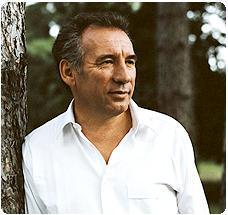 Although Bayrou appears to be in third place, the peculiarities of the two stage electoral process in France mean that he’s the candidate with the greatest potential majority in the second stage, assuming that he gets through the first stage of course. It seems that the candidates in France have had a similar analysis of the voting possibilities to our own and are adjusting their approaches accordingly.
As reported in the Financial Times, this has already had a considerable impact on socialist thinking with an unsigned manifesto in Le Point calling for quite a radical rethinking of socialist policies. In effect, this would represent the realignment of socialism in France that happened with socialism elsewhere in Europe some years ago. Will that realignment happen this time around? I suspect not as there seems very little time before the election now and I can’t really see such a change being one that the electorate would believe.
To an outsider Sarkozy doesn’t seem to need that radical shift in ideology required by Segolene in that he runs what appears to be a very modern party with equally up to date policies. A few weeks ago I thought that his approach would be a little too radical for France at this time but apparently not if the polls are to believed. It does seem though that it’s now even more important that he aims to knock Bayrou out of the race at this point.
What about Bayrou in all this? In many ways it seems as though he is likely to win not so much as a positive statement by the electorate but rather as a vote against the other two candidates which is, of course, exactly what happened last time around when Chriac came up against Le Pen in the second round. The difference this time around is that Bayrou seems to be a realistic possibility in the eyes of the electorate and perhaps we will be referring to him as President Bayrou in just a few months time. If they’re lucky perhaps he will even deliver that “third way” that the French often seem so keen on having but have never quite managed.
Copyright © 2004-2014 by Foreign Perspectives. All rights reserved.Buying a house in France: part 12: housing: where to look for a house
The housing sales market has been very slow in France during 2006 which we’ve noticed through the large drop in house buyers staying with us during the year.However, it does seem to be picking up fast as we’ve had quite a flurry of house hunters staying with us recently and bookings into the new year for house buyers are well up on what they were over the same period last year. That in turn appears to be taking the prices being asked for up too so if you’re planning on buying somewhere over here it might be as well to get moving on that idea sooner rather than later.One of the best ways to get a feel for the market here is via the major property exhibitions in London. The best one is Vive la France which is a combined French property and culture exhibition held each January. If you miss that one, the next best is the French Property Exhibition in early September which is basically Vive la France without the cultural section. There are regional versions of both of these but it’s usually best to get to the London one if you can as the exhibition there is on a much larger scale than the others.
In both cases, you should go on the first day of the exhibition because it’s quieter and the exhibitors aren’t nearly so exhausted. As 90% or more of the people going to these things are just window shopping with no real intention to buy, it’s important to separate yourself from them in some way. In our case, we took along a short specification of the type of place and sort of area that we were looking for and made it clear that we were returning to France 2 or 3 weeks after the exhibition on a buying trip.
I thoroughly recommend writing a little specification of what you’re looking for as both exhibitions are enormous and you’ll need to be quite clear in your mind what you want. With our little specification we were able to go through the list of exhibitors and rule out all those that weren’t of interest in about 10 minutes. You really need to be ruthless doing this as even with that we spent over five exhausting hours going round those that remained on the list!
Rather than picking out specific houses at the exhibition, it’s best to pick out agents working in the areas you’re interested with the type of properties that you want. The reason for this is that a lot of the houses listed sell very quickly indeed. In our own case, we had picked out about 20 properties to look at yet all but one were sold by the time we went to look at them just three weeks later.
Use the Internet in your searches too. Sometimes excellent properties are poorly listed so you can sometimes pick out a bargain if you research the area. For example, searches looking for “house for sale in the pyrenees” may not pick out “house for sale in maury” or even “house for sale near perpignan” when you might assume that it would. Use synonyms too eg “house for sale”, “property for sale”, “farmhouse for sale”, etc. Searches in French will usually turn up a completely different set of properties (often at lower prices) eg “maison a vendre pres de perpignan” usually won’t give you the same list as “house for sale near perpignan”. Search for agents too (“agence immobliere”) as often their property pages aren’t properly indexed on google. Don’t just google either as often yahoo.com and search.msn.com turn up quite different results.
If you are hoping to buy in France, the best times are out of season as that will give you a better impression of what the villages and towns are really like. There’s normally a flurry of house hunters around just after the two property exhibitions mentioned above but any time from mid-September to mid-June is excellent (avoiding the Christmas, New Year and Easter breaks) and will give you low flight and hotel prices too.
Copyright © 2004-2014 by Foreign Perspectives. All rights reserved.Would you bet on this horse-race?
 The French presidential election is a two stage process which creates almost a horse race approach to the presentation of statistics from the various polls.
Whilst Sarkozy is clearly the front runner and, to a UK audience, “obviously” he will win, that’s not quite so obvious as it might appear. If, as seems likely, the first stage vote doesn’t give Sarkozy over 50% of the vote then the top two polling candidates will proceed to the second stage of the voting.
As we write this, it seems certain that Sarkozy will get through to the second stage and let’s take that as read for the moment to simplify the rest of this discussion.
The second person who gets through is far from a sure thing at this point as the polls are indicating that Royal is sitting on 23% and Bayrou on 21%. Considering how polls work, it’s quite possible that the real position is, say, Royal on 21% and Bayrou on 23%. Yes, the polls indicate a margin of error which would exclude that but that’s before you consider the major problem that the pollsters face which is that those they ask sometimes say what “sounds good” rather than saying the way that they will actually vote. Some years ago this resulted in a totally incorrect prediction in the UK in the days when people thought that they should say they were going to vote Labour but they actually voted Conservative on election day.
In any event, the second position candidate could be either Royal or Bayrou which leaves us with two possibilities for the second round ie Sarkozy vs Royal or Sarkozy vs Bayrou.
Interestingly, the polls indicate that Sarkozy will only win if he is up against Royal in the second round and even then only by a small margin (2%). If he’s up against Bayrou, chances are that he’ll lose by a fairly large margin (10%). So, although Sarkozy has a comfortable 6% lead on Royal on the first round, he’s more likely to lose the second round than he is to win it.
I don’t know if they get into tactical voting in France, but if they do, it looks like it would be worthwhile for Sarkozy supporters to be encouraging Royal supporters and for Bayrou supporters to be encouraging Sarkozy supporters at this point.
Would you still bet on the outcome of the race?
Copyright © 2004-2014 by Foreign Perspectives. All rights reserved.

