Archive for the ‘Banking’ Category
 Posted in
Barcelona hassles
 August 29th, 2007 |
  Author:
 Since we’d to go back to the Halifax in Spain, we thought that we’d stay in a hotel in Barcelona rather than doing a round trip of about six hours driving.
Good idea in principle as the hotel would have cost around the same as the petrol and tolls and we’d have had a full day in Barcelona too which would have been nice.
However, we didn’t allow for the combination of somewhat elevated prices (despite the hotel being almost empty) and the very poor signposting in the city. Anyway, we tried the Ibis which used to be around EUR 60 but is now EUR 90 so we thought we’d try the Campanile near Baricentro instead.
We’ve been planning on staying in that Campanile for ages as it’s just beside a shopping centre which needs a full day to do it properly plus the Campanile are brilliant for families. Not so this one. Despite their child policy allowing children under 12 to stay free, they said that they’d only rooms for two and we’d have to take an extra one for the kids. Actually, now that we’ve looked at their website in fact they DO have rooms for three. They were available too as the carpark was virtually empty but that in itself is no real surprise as it took us nearly an hour of driving past the place on the motorways which surround it before we happened across the single (unmarked) exit required to get into the hotel.
They must make a fortune on no-shows! If I could buy a small house in that estate I’d be tempted to list it as a 300 bedroom hotel on the basis that virtually nobody is able to get to it.
Copyright © 2004-2014 by Foreign Perspectives. All rights reserved.Merchant accounts to accept credit cards
One of the first shocks that you get when you start your own business is the extra cost of business accounts. Whilst the list of charges for personal accounts is usually fairly short, there seem to be untold numbers of things that banks feel the need to charge you for as a business.
Now, you would sort-of expect that they would charge you if you’re depositing large amounts of cash in that there’s obviously work involved in handling it. You probably also know that they charge a percentage of your credit card sales too and that there’d be a charge for the credit card terminal too. But setting up the terminal? Providing the software for it? Surely not?
Well, if you plan on taking everything from your own bank, yes, you probably will be charged for setting up the terminal and you probably will be charged for the software required to run the thing too (anything up to $500). Not only that, but try accepting card payments online and you’re potentially talking another $500 for the software that you’ll need to accept those payments too.
That’s just for the standard Mastercard and Visa acceptances too. Add American Express or anything else and you add to your costs yet again. Even commonly used things such as the ability to process customer not present transactions is generally seen as another opportunity to charge you.
What the bank won’t be too upfront about telling you is that you can get a merchant account from a separate organization. There are increasing numbers of these outfits around and the market competition is driving prices down with the likes of First Data providing free setup, free point of sale software and 24/7 service (something that, quite surprisingly, isn’t always provided by the banks) and things that you might expect to be standard but usually are billable such as reprogramming of the terminal.
Copyright © 2004-2014 by Foreign Perspectives. All rights reserved.Indicators of peace
Northern Ireland hasn’t been in the international news much lately but that’s not really an indication of peace as such, more an indication that violence isn’t happening which isn’t quite the same thing (welcome as non-violence always is, of course).
In fact the first indications of the arrival of peace was on its way started quite a number of years ago and, to my mind, was the arrival of the supermarket chain Tesco in 1997. Prior to that the only UK supermarket chain operating in Northern Ireland was Marks & Spencer which had opened in 1967, 2 years prior to the start of the troubles, and hadn’t bothered expanding much since then. Nothing really says that peace is coming quite like big chunks of cash being invested.
However, the more certain arrival of peace (as opposed merely to reducing violence) was really only in the last few years and that has been marked in two very noticeable ways. Firstly the investments being made in the local economy are massive these days: you can’t drive more than a mile or two in Belfast without seeing building works of some kind. That’s also an aspect of the second point which is that there has been a large scale migration to Northern Ireland by everyone from the Poles to those that left because of the violence. Combine those two and the booming of the economy is very noticeable.
One very obvious side-effect of that mass immigration is that the house prices are going through the roof (hence the building work everywhere, of course) which is effectively a catching up on rises that didn’t happen in the last 30 years. The banks don’t seem to know what has hit them and mortgages are now available for up to 8 time salary (vs the maximum of 3 times just 3 or 4 years ago).
Anyway, at least Northern Ireland can now stand as an example of what it’s like when you do get to the end of the violence. Hopefully, it’ll provide an encouraging example to areas of the world that are still immersed in a culture of violence such as Colombia.
Copyright © 2004-2014 by Foreign Perspectives. All rights reserved.A passbook account for the grandchildren
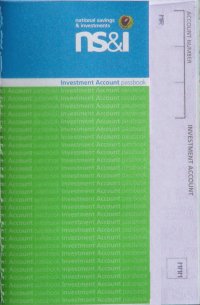 My parents were asking for a passbook account for their grandchildren as they aren’t keen on card based accounts.
Almost all accounts these days are card or internet based and the initial couple that I came across weren’t great as the building societies concerned didn’t have that many branches. Finally, I settled on the National Savings Investment Account which only requires a £20 deposit to open and also pays interest gross at quite a reasonable rate.
Opening it is a little peculiar as the Post Office branch doesn’t ask for any proof of ID or address and instead National Savings do the whole lot electronically. That worried me a little as I wasn’t sure that we’d turn up on their records but the books have arrived so we must do. Even stranger though is that they didn’t ask for any proof of ID from the children (normally you’re asked for a birth certificate) and one of ours was born in France so I can’t seem him appearing on any UK records.
Anyway, my parents are happy that they’ve a book for the grandchildren.
Copyright © 2004-2014 by Foreign Perspectives. All rights reserved.Buying a house in France: part 21: french finance
If you’re used to the wide variation of mortgage offers in the UK, the French marketplace is child’s play: as far as we can tell, all mortgages are either fixed or variable rate and they are all the repayment type.
If you are buying your house “subject to mortgage”, you will need to see the bank before you see the notary as you will need to say “subject to obtaining a mortgage from X bank at Y% over Z years”. If this isn’t added to the “compris” then you will lose your deposit if you can’t get a mortgage.
French investments are incredibly simple too. The only problem with them is that you need to buy them through an advisor which is even more of a pain than trying to do something banking-related through your bank advisor. Due to this and the very limited range available, it’s best to continue to do your investing through the companies that you are already using.
This is part of our series on buying a house in France; next week we start venturing into French administration.
Copyright © 2004-2014 by Foreign Perspectives. All rights reserved.

