Archive for the ‘Banking’ Category
 Posted in
  Tags:
Tags: 
Where should you move your money to after the Northern Rock, Bradford & Bingley and Alliance & Leicester?
 August 18th, 2008 |
  Author:
 Unless you’re planning on putting the cash under the mattress, you’re going to need another bank or building society to put your money in when you take it out of the Northern Rock etc., but which one?
Many people will just look up the best buy tables and find that ICICI bank is right up there and move it right over. Somehow I’m not totally sure that putting your life savings in an Indian bank is such a good move. Next choice would be West Bromwich though that’s a fairly small building society, whether they could cope with the arrival of massive numbers of customers is another matter. Bank of Scotland seems the best bet to me with 6% from £5000 although that limits you to 4 withdrawals per year before the rate drops substantially.
But if you’re looking for absolute security, there’s only one choice: National Savings. 4.1 % from £5000 on their Investment Account, 5.15% from £50,000 on their Easy Access account. Deposits with them are effectively deposits in the Bank of England which can’t go bust. You can open these in the Post Office or online (note: these accounts are not the same as the Post Office savings account).
Copyright © 2004-2014 by Foreign Perspectives. All rights reserved.Free money transfers
One thing never to neglect when you’re living abroad is the cost of changing money from one currency to another yet virtually nobody considers it.
The costs can be quite substantial too. A friend of mine who was living in Brussels once casually remarked that he just used the Halifax as he did at home, lifting EUR 20 or EUR 30 whenever he needed it. He was more than a little takenaback when I pointed out that by doing that he was paying around 10% of his entire salary in bank charges. Yes, that much.
We’ve had quite a run of Brits living in Spain stopping with us on their way to/from the UK this year and I was very surprised to find that only one of them used the Nationwide credit card. Yet, that’s the only one that offers free exchange from sterling to other currencies (and all of the people concerned were living on a UK based income).
The other alternative for euro-zone countries is the Halifax which operates as Banco Halifax in Spain. They offer free transfers from UK based Halifax (and Bank of Scotland) accounts to Halifax in Spain. Although they don’t currently operate elsewhere in Europe, the Spanish outfit is quite sufficient for those in eurozone countries as you can, of course, use the supplied debit card outside Spain for purchases (it’s a bit expensive for ATM withdrawals outside Spain).
Very handy and the whole thing operates in English.
Copyright © 2004-2014 by Foreign Perspectives. All rights reserved.Every consider that car insurance is something you could do without?
I’m sure that if we’re honest, many people would say they’d skip on car insurance if it wasn’t compulsory.
However, there are times when it’s a pretty handy thing to have. Consider one of our guests last night….
What happened is that his car caught fire as he was driving along the motorway in France yesterday afternoon. That’s not really something that you expect to happen, is it? Anyway, the towing would have been several hundred euro, the transport to his hotel over EUR 100, the hotel another EUR 80 or so and it looks like the repairs will cost well over EUR 1000. Oh, and then there’s the not so insignificant matter that he’ll probably end up having to fly home and then back to collect the car as this is a holiday week and so it probably won’t be repaired for at least another week.
OK, a none too likely scenario for most of us I’m sure but it shows just how quickly the bills can mount up.
Copyright © 2004-2014 by Foreign Perspectives. All rights reserved.A passbook account for the grandchildren
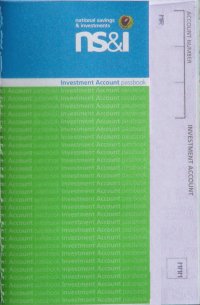 My parents were asking for a passbook account for their grandchildren as they aren’t keen on card based accounts.
Almost all accounts these days are card or internet based and the initial couple that I came across weren’t great as the building societies concerned didn’t have that many branches. Finally, I settled on the National Savings Investment Account which only requires a £20 deposit to open and also pays interest gross at quite a reasonable rate.
Opening it is a little peculiar as the Post Office branch doesn’t ask for any proof of ID or address and instead National Savings do the whole lot electronically. That worried me a little as I wasn’t sure that we’d turn up on their records but the books have arrived so we must do. Even stranger though is that they didn’t ask for any proof of ID from the children (normally you’re asked for a birth certificate) and one of ours was born in France so I can’t seem him appearing on any UK records.
Anyway, my parents are happy that they’ve a book for the grandchildren.
Copyright © 2004-2014 by Foreign Perspectives. All rights reserved.Opening a bank account in France as a resident and as a non-resident
If you are intending to buy a property in France at some point, it’s pretty much essential to open a French bank account before you get to the point of purchase.
For non-residents, the internet banking companies are not an option. Indeed, they are, on the whole, not an option unless you have been resident in France for a year or two as they ask for proof of French income. An exception to this is Ing although that’s purely a savings account and also requires you to already have a French account.
If you bank with HSBC, the easiest option for you is to open an account with HSBC in France. Those with Premier accounts can ask their relationship manager to do this but otherwise it’s best just to pop into an HSBC branch whilst you are in France (they’re not currently set up to open non-resident accounts outside the Premier arrangement). Although with Premier accounts in two countries you get free transfers between them, HSBC France is one of the highest charging banks in France so this may not be the best option for you.
Before starting the opening process, you should have a look at the French banking practices section of our Living in France guide.
Both Barclays and LloydsTSB offer a French service. However, their branches are clustered around Paris and the Cote d’Azur and not particularly cheap.
A number of French banks offer English speaking services and, on the whole, these are much cheaper than those on offer from the British banks (the American banks in France only cater for high net-worth individuals and not suitable for most people).
Of these, the most popular is Britline which is a English speaking phone & internet banking branch of Credit Agricole based in Normandy. The service from them is excellent but the services of most other branches of Credit Agricole is between dire and truly dreadful; you can however use the Britline across France so usually don’t need to bother with the local branches. Credit Agricole is a regional bank so, unless you live in Normandy, your local Credit Agricole is a different bank from Britline which limits the facilities available in branches if you’re using Britline as your bank but in practice this merely means that you can’t use the automated deposit machines.
More generally useable is Banque Populaire which has a number of English speaking branches in various regions around France although the most targetted at the English speaking community is that in the Cote d’Azur. This is also a regional bank so you can expect some limitations to the services on offer through your local Banque Populaire. The biggest plus of this is that the service in the branches is, on the whole, much better than Credit Agricole and the charges are significantly less too.
The two national banks, BNP Paribas and Societé Générale, also have a number of English speaking branches but they don’t promote these actively. An account opened with any of these can be used anywhere in France with the same level of services as they are not regional banks. The other plus point is that they are much larger banks and therefore offer a much wider range of services.
To open accounts in any of the above, use the contact details here and they’ll send you the necessary forms (you can’t open any non-resident accounts online in France). In terms of documentation, all that is normally required is a photocopy of your passport and an original electricity bill. If you are opening the account some time in advance of needing to use it, don’t bother getting a debit card as these cost from EUR 20 to EUR 200 per year. It’s quite easy to stick to using cheques in France as everyone takes them with proof of ID (passport or driving license). Finally, don’t be caught out by inactivity fees which are around EUR 50 per year if you don’t use the account.
If you are moving to France, do not wait until you are in France before you try opening an account here as you won’t be able to provide the proof of address required for several months. If the account is opened before you move, you can simply change the address which in turn will provide you the required proof of French address required to get a French mobile phone. Opening an account whilst you are living in France is, for the most part, a nightmare best avoided involving making appointments with your conseilleur and getting signed up for expensive and useless additional services which are next to impossible to cancel afterwards.
Before opening your account, you should read the French banking practices section of our Living in France guide.
This is part of our series on international banking which covers how to open and use accounts in various jurisdictions around the world including America, Switzerland and various offshore banking centers such as the Channel Islands, Isle of Mann and Bermuda.
Copyright © 2004-2014 by Foreign Perspectives. All rights reserved.

