Archive for the ‘France’ Category
 Posted in
Buying a house in France: part 5: Local languages
 February 2nd, 2007 |
  Author:
 This is one aspect of French life that is really simple. This is France, so everything is in French.
Well, almost. You didn’t expect it to be so simple as that, did you?
There are various regional languages in France from Breton in Brittany to Catalan in Catalonia. For the most part, these languages are barely paid lip service by the French authorities. For example, the capital of the Pyrenees-Orientale departments bills itself as “Perpignan le Catalán” yet in reality the Catalan language is only represented by the bilingual signs outside villages in Catalonia and the odd article in the magazines distributed by the Conseil Regionale. This lack of support for the language is effectively killing the language in France so, for example, our neighbour’s father speaks Catalán as a native tongue, he speaks it as a second language and his children don’t speak it at all.
Things are very different just over the border where more and more of the signs have dropped bilingualism and are only in Catalán. Even the brochures in the shops are almost exclusively Catalán only. In fact, Catalán is pushed so much that in a recent shopping trip to Girona one or two of the shop assistants all but refused to serve us when we asked for some things in Spanish.
I think it’s sad that the children can’t speak to their grandparents in their native language in France but Spain has definitely taken it too far and I feel sure that it will end up as being very devisive.
This series is available in reference form on our Living in France pages.
Copyright © 2004-2014 by Foreign Perspectives. All rights reserved.British food in France
 One of the first signs of the arrival of the brits in an area of France is the occassional appearance of the Sunday Times. Closely followed by that are the British food sections in the local supermarkets.We observed this process in action locally as neither the Sunday Times nor British food aisles were in any of the local supermarkets in April 2004. Within 12 months the Sunday Times started to appear in newsagents in Estagel and most of the local supermarkets had at least a token representation of British goods at extortionate prices.
A few years on and the local supermarkets offer a fairly reasonable choice as you can see. Prices aren’t what they might be though with baked beans costing 49p in the UK being sold at the equivalent of around 87p for instance. However, that’s for specialist food so to speak as the existence of the British section has also been accompanied by various brit-foods appearing elsewhere in the supermarket at local prices. For instance, Carrefour even put out their own brand salt & vinegar crisps and Leclerc sell proper bacon these days.
Noticeable too is that it really is a British section and not just an English one. After all, who but the Scots drink Irn-Bru?
What is a little odd is that the Catalán food has started to disappear into the ethnic foods section when in the past it was spread around the supermarkets.
Copyright © 2004-2014 by Foreign Perspectives. All rights reserved.Revelations from the France of the 1950s: the United Kingdom of Great Britain, Northern Ireland and France
 We watched with interest and some amazement at the recent revelations that France had proposed a unification with the UK back in the 1950s.
If it had gone ahead in either of the forms proposed there would have been much that would have been different in the last 50 years. The European Union would never have gotten off the ground for a start or at least it would have but in a very different form with countries joining either the United Kingdom of Great Britain, Northern Ireland and France or the British Commonwealth depending on which option they had ran with back then. Would the Commonwealth have once again become the British Empire?
Presumably either way the British Commonwealth would have remained a source of goods rather than being pushed to the one side as sourcing for bananas and the like moved towards European countries.
Would it have made a difference to how the settlement of France by the brits has actually happened in recent times? It certainly could have started to happen much earlier as it was only possible to move easily to France after various European laws came into force but with a UK including France that movement could have started nearly 30 years earlier.
I think that the timing of things is perhaps the major difference that there would have been. The channel tunnel would have been built a lot sooner as a means of tying the new kingdom together and we might even have had the BritishFrench Airways Concorde still flying as the symbol of a much larger nation.
‘Tis a shame that it didn’t get off the ground.
Copyright © 2004-2014 by Foreign Perspectives. All rights reserved.Advantages of staying in British owned accommodation in France
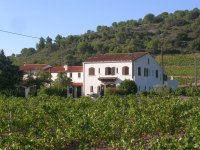 If you ask an estate agent for accommodation suggestions for a house hunting trip, they will almost always suggest a hotel in the town that their office is in.
That certainly makes it handy to see them, but it’s almost certainly not the best choice for you. Most people who look for property in France are looking for somewhere in the country so staying in a town-centre hotel won’t give you any opportunity to experience the kind of life that you are considering.
Not only that, but the hotel will almost certainly be French run whereas if you choose somewhere that’s run by someone who has made the move from the UK themselves you can ask them about it and avoid the “everything is wonderful” type of answer that you’ll get from all the estate agents. Such people will have looked at the area with “your eyes” so to speak and be able to point out pros and cons about the various parts of their region throughout the year.
If you’re considering the south of France not call in with us at Mas Camps? We live in one of the most beautiful but lesser known (hence cheaper) regions just west of Perpignan.
Copyright © 2004-2014 by Foreign Perspectives. All rights reserved.Buying a house in France: part 4: French for your children
 As with yourself, there are two aspects of this ie what to do before you come here and what to do after you get here.
Before you get here, you should try to encourage your kids to enroll in French classes where they are available. If you’re near a large town or city you may be able to enroll younger children in French language playgroups and the like. One thing that you shouldn’t do is to speak French to the children yourself as this way they’ll pick up your French accent: we’ve heard many British children who’ve been here for some years still saying BON JURE rather than BO ZHUR simply because their parents spoke French to them from the start. Take particular care that playgroup leaders are native French speakers.
When they get here, if you can, you should enroll 2 to 11 year olds in a French school (more on education later) and 12 to 18 year olds in a bilingual school. I recommend bilingual so that your children can keep up their fluency in English as well as French; we’ve touched on this aspect several times in the past which are worth reading to see the kind of difficulties you can find with French language schools for older children.
Next week is our final section on languages: the local languages in France and what to do about them.
This series is available in reference form on our Living in France pages.
Copyright © 2004-2014 by Foreign Perspectives. All rights reserved.

