Archive for the ‘Places’ Category
 Posted in
The France Show advertising
 November 28th, 2007 |
  Author:
  For those interested in France and perhaps thinking of buying a house in France at some point there are really only two property exhibitions that are worth considering which are the French Property Show in September and the Vive la France exhibition (now called The France Show) in January.
Anyone at all serious about property purchase in France should know of both of these or else they’ve been hiding out of reach of any France related publication. I had thought they were both so well known that there wouldn’t be any need to explicit advertising for either of them other than the mentions that both get in the numerous France property magazines.
And yet, they DO advertise, seemingly quite extensively. Why?
Well, my guess is that the punters were a little thin on the ground at the last exhibition in January 2007 as they certainly were very thin on the ground in France: we had no housebuyers staying with us at all during 2006. So, the organisers have hit the panic button this time to avoid any repetition.
Ironically, the housebuyers seem to be reappearing of their own accord so it’s probably going to be one of the most packed France exhibitions seen for some time. Of course, this just goes to show that people treat the Vive la France advertising more as a note of somewhere to go if they’re serious about buying than as something which puts them into a buying frame of mind. For really serious purchases such as for houses, advertising doesn’t change opinions a whole lot.
Copyright © 2004-2014 by Foreign Perspectives. All rights reserved.When’s a bank not a bank?
When you look around in a new country you generally bring all your preconceptions as to what a bank is with you.
Typically, the assumption is that a financial organisation is a bank if it issues credit cards, debit cards and cheque books whereas it’s a building society if it largely confines itself to savings accounts and mortgages. Of course, in many countries such distinctions don’t exist 100% of the time and there’s usually something of a graduated scale between building society and bank in most countries these days.
In fact, a more realistic distinction these days is probably based on size (however that might be measured) and perhaps the extent of international activities. So, for example, although most people would call the likes of the Halifax in the UK a building society in fact in both legal and practical terms it has been a bank for many years. For example, it has been issuing cheque books since the 1970s if not before and has had international activities for a substantial time too.
On the other hand, the various Credit Agricoles in France are clearly in the building society camp. Yes, they issue cheque books but their debit cards aren’t run by themselves and their international activities are nil, at least as far as the regional Credit Agricoles go.
Spain by contrast has the fairly substantial La Caixa which is a savings bank in name only although with few international activities up to now.
Copyright © 2004-2014 by Foreign Perspectives. All rights reserved.Working from home: the effect on the accent of the little guys
When we had the first little guy I was the one working as Wendy was at home looking after him but by the time we had the second little guy we were both working from home.
Since Wendy’s from Sydney and I’m from Belfast, that has had an unexpected effect on the accents of the two. James, the oldest, speaks with a mainly Sydney accent but with a Belfast sprinkled in amongst it whilst John speaks largely with a Belfast accent but with Sydney words in it.
Of course, that’s why they refer to your first language as your mother tongue in that, in times gone by, it was always the mother that was around the children the most. That’s obviously still the situation for most people these days but there are a growing number of families where it’s the mother working and the father at home or even both at home.
Obviously it’s not as noticeable when both parents are from the same place but when they’re not it can produce an interesting mix of accents in the speech of the children.
Copyright © 2004-2014 by Foreign Perspectives. All rights reserved.Father and Son
As part of my “thinking about an English literature course” thinking, I’m currently plugging away with reading Father and Son
To be honest, I thought that I’d hate it from start to finish but I find that I’m getting on for 1/3rd of the way through it now and it’s easy going as far as reading it is concerned. I’ll grant you, that it wouldn’t have been a book that I’d have bought if it weren’t for the course but it isn’t the chore that some of the other books have been to read. Actually, given the era in which it was written, it’s a surprisingly easy book to read on the whole.
If you’re wanting an easy way into late 19th century English literature, this wouldn’t be a bad place to start.
Copyright © 2004-2014 by Foreign Perspectives. All rights reserved.The Fenouilledes Rally 2007
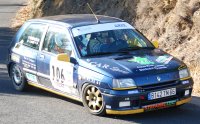 We didn’t manage to get out to see the rally on Saturday so we’d quite a trek to get to Ansignan to see it on Sunday morning.
As usual in France, all the promotion of the event is in French so there are relatively few foreigners attending what is quite a good rally. The most complete information on the rally is on the French site here which will have the information on the winners etc. in the not too distant future. One interesting consequence of this limitation in the promotion is that Foreign Perspectives achieves top ranking for searches about the rally.
The area over which the rally takes place comprises quite an intricate set of roads so you need to know the area fairly well or have a very good map to work out how to get to the various vantage points. For example, a journey which normally takes about 30 minutes from here ended up taking nearly 90 minutes due to the various diversions for the rally.
Whilst it’s mainly French teams taking part there’s quite a sizeable representation from Spain too.
Quite an interesting event if you’ve over here at the appropriate time next year (probably November 23rd & 24th 2008). Although it’s usually pretty good weather here, the route goes through several rather windy mountain passes so it can be pretty cold if you’re out of the sun.
Copyright © 2004-2014 by Foreign Perspectives. All rights reserved.

