Archive for the ‘Relocating’ Category
 Posted in
Buying a house in France: part 13: housing: the buying process
 March 29th, 2007 |
  Author:
 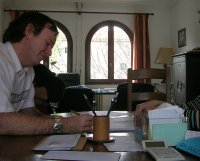 In many ways, the house buying process in France is quite similar to that in the UK but there are important differences.
Once you’ve found a place, the first stage is to sign a Promis d’Achat (promise to buy). If the seller accepts this, then you have your house as they aren’t allowed to even show it to anyone else (ie no gazumping), subject to you following through with the later stages of the purchase, of course. Signing this commits you to buy the place at the agreed price but only commits the seller to sell to you if they accept this contract.
Since it commits you to buying, you MUST add a “subject to mortgage” clause if you plan on getting a mortgage for the purchase. The mortgage clause needs to include the bank that will be giving you the mortgage, the rate and the term of the mortgage so if you are hoping to get a French mortgage you’ll need to see the bank first. If you haven’t done so already, you should open a French bank account at this stage (links to the various banks are in the Foreign Perspectives directory) During the next two weeks or so the notary will draw up the Compris d’Achat which is the sale contract and will come with an inventory of what’s included in the price and a completion date for the sale. You need to pay a deposit of 10% (sometimes 5%) to the notary at this point. Although you and the seller can use the same notary, it’s best to have your own one (this doesn’t cost any extra as the notaries split the fees). Read the inventory very carefully as what is understood to be included in France is very different to what is understood in the UK. For instance, you can be left with bare wires where light fittings used to be and even gaps where there used to be doors.
On the completion date, you go along to the office of the sellers notary and sign for the property. You need to sign every single page of the contract so allow an hour or perhaps two to do this. Once completed, the property and everything in it is yours. Unlike in the UK, everything you find within the property at that point belongs to you which sometimes includes the likes of unwashed dishes in the sink but can also include furniture and the like eg in our case we acquired a very nice desk valued at 9,000‚€!
Once the sale is completed, the estate agent will arrange to have the electricity, phone, etc. transferred into your name. If you are buying a commercial property (eg B&B) you must be registered with the Chambre of Commerce before these can be transferred into your name.
Copyright © 2004-2014 by Foreign Perspectives. All rights reserved.Is Belfast anti-European? Exchanging a European driving license in Northern Ireland
 Seeing as SuperFrenchie thinks I’m “just” anti-French, I thought I’d redress the balance a little and point out one area where the UK is anti-European too.
I was in getting my driving license renewed last week which is something of a hit and miss affair as the explanatory leaflet leaves a LOT to be desired in clarity. Even though the thing was in English and, one would assume therefore that I’d understand it, the opening paragraph on what proof of ID was required was totally incomprehensible and appeared to be totally wrong too.
It opens by saying that if you have a colour photograph on your existing driving license then you don’t need to have someone certify your photograph nor to present a passport. Except, that when my father presented his renewal application complete with his old driving license with colour photo, they wouldn’t renew it without his passport.
It then goes on to say that you always need to have your photo certified yet they happily renewed mine with only my passport.
Then it says “digital photographs are not acceptable” yet they DO accept them, mainly because all of the photobooth machines only produce digital photos these days.
The best bit is perhaps their definition of residency. Despite living in France for three years, I still qualify for a Northern Ireland driving license as, according to their definition, I am still resident there!
However, none of that’s anti-European….
Whilst we were there, one of the increasing number of Polish immigrants arrived to exchange his license for a Northern Ireland one. In theory, he doesn’t actually need to change it at all but the lady in the office reckoned that he had to change it within six months (anti-European point 1). He presented his Polish ID card. Not acceptable: we need a passport (anti-European point 2) which isn’t actually what it says on their website. What she said he needed was to have his photo certified by someone in Northern Ireland who knew him for two years.
Emmm, so he MUST change his driving license within six months and, because you won’t take his valid ID card, he must find someone in Northern Ireland who knew him 18 months before he arrived?
Copyright © 2004-2014 by Foreign Perspectives. All rights reserved.Buying a house in France: part 12: housing: where to look for a house
The housing sales market has been very slow in France during 2006 which we’ve noticed through the large drop in house buyers staying with us during the year.However, it does seem to be picking up fast as we’ve had quite a flurry of house hunters staying with us recently and bookings into the new year for house buyers are well up on what they were over the same period last year. That in turn appears to be taking the prices being asked for up too so if you’re planning on buying somewhere over here it might be as well to get moving on that idea sooner rather than later.One of the best ways to get a feel for the market here is via the major property exhibitions in London. The best one is Vive la France which is a combined French property and culture exhibition held each January. If you miss that one, the next best is the French Property Exhibition in early September which is basically Vive la France without the cultural section. There are regional versions of both of these but it’s usually best to get to the London one if you can as the exhibition there is on a much larger scale than the others.
In both cases, you should go on the first day of the exhibition because it’s quieter and the exhibitors aren’t nearly so exhausted. As 90% or more of the people going to these things are just window shopping with no real intention to buy, it’s important to separate yourself from them in some way. In our case, we took along a short specification of the type of place and sort of area that we were looking for and made it clear that we were returning to France 2 or 3 weeks after the exhibition on a buying trip.
I thoroughly recommend writing a little specification of what you’re looking for as both exhibitions are enormous and you’ll need to be quite clear in your mind what you want. With our little specification we were able to go through the list of exhibitors and rule out all those that weren’t of interest in about 10 minutes. You really need to be ruthless doing this as even with that we spent over five exhausting hours going round those that remained on the list!
Rather than picking out specific houses at the exhibition, it’s best to pick out agents working in the areas you’re interested with the type of properties that you want. The reason for this is that a lot of the houses listed sell very quickly indeed. In our own case, we had picked out about 20 properties to look at yet all but one were sold by the time we went to look at them just three weeks later.
Use the Internet in your searches too. Sometimes excellent properties are poorly listed so you can sometimes pick out a bargain if you research the area. For example, searches looking for “house for sale in the pyrenees” may not pick out “house for sale in maury” or even “house for sale near perpignan” when you might assume that it would. Use synonyms too eg “house for sale”, “property for sale”, “farmhouse for sale”, etc. Searches in French will usually turn up a completely different set of properties (often at lower prices) eg “maison a vendre pres de perpignan” usually won’t give you the same list as “house for sale near perpignan”. Search for agents too (“agence immobliere”) as often their property pages aren’t properly indexed on google. Don’t just google either as often yahoo.com and search.msn.com turn up quite different results.
If you are hoping to buy in France, the best times are out of season as that will give you a better impression of what the villages and towns are really like. There’s normally a flurry of house hunters around just after the two property exhibitions mentioned above but any time from mid-September to mid-June is excellent (avoiding the Christmas, New Year and Easter breaks) and will give you low flight and hotel prices too.
Copyright © 2004-2014 by Foreign Perspectives. All rights reserved.Buying a house in France: part 11: housing: what’s available
France is massive and so is the variety of houses that you can get with everything from small apartments to large castles on the market and locations varying from the city centre of Paris to rural areas with just the odd passing cow for traffic.The first things that you need to decide for yourself when looking for a place in France are what type of property you want and what kind of area you would like that property to be in. These two aspects are closely inter-related in that you won’t be able to buy a chateau in the centre of Paris nor buy a chic apartment in rural Roussillon.The days of run-down barns available for a few thousand pounds are long since gone and prices these days start at around 50,000‚€ which will buy you anything from a reasonable townhouse in the country to an apartment on the outskirts of a town. What that price won’t buy you is a chic apartment in the centre of Paris nor will it buy you a massive farmhouse ready to move into.
On the other hand, there are still bargains around. As we write this, there are a number of quite charming chateaux for sale at around the 600,000‚€ (£400,000) mark although at that price level you should expect to have some work to do to them. Similarly, if you are prepared to move outside the brit-enclaves and into the real France you will find quite substantial properties for perhaps 300,000‚€ (£200,000) although again you should expect to do some work at this level.
Where are these brit-enclaves though? Well, one easy to find them is to pick your favourite B&B listing site (which must be, of course, Chambre-d’Hote) and look at areas with large numbers of listings. At the moment, you’ll find these mainly around Brittany/Normandy, Poitou-Charentes, Dordogne and Cote d’Azur. Prices in these ares are, generally, that little bit higher than in the surrounding areas for comparable properties.
If you haven’t got your heart set on a particular region in France, the best thing to do is to make up a list of the characteristics of the type of area that you are looking for. For example, we wanted a place that was within 10km of water that we could swim in which meant that we looked at properties near the coast and near lakes etc. We also wanted somewhere broadly in the southern half of France which narrowed down the search a little. Finally, we wanted somewhere with views of the mountains which reduced the areas somewhat more.
Doing this will bring up a number of regions that you may not have thought about before and give you a much wider selection of properties. Note too that it’s best to think about why you want a particular feature eg we didn’t say that we wanted to be on the coast but rather that we wanted to be near water that we could swim in. Likewise we said that we wanted somewhere scenic rather than with views of the mountains.
Copyright © 2004-2014 by Foreign Perspectives. All rights reserved.Buying a house in France: part 10: visas & immigration: non-Europeans
This section very briefly covers the variety of circumstances that may apply and how you might go about moving to France if they apply to you. There are just too many combinations and special circumstances to adequately cover all of the possibilities so hopefully this will give you a feel for how you might ease your transition to France.
If you are a visa national (ie a citizen of a country requiring a visa to enter France), then your first hurdle is the French embassy in your country of residence. There are many visa categories but the simplest lie in the areas of family reunification or if you already have a job offer in France.
I imagine that for most people the “job offer” option is most likely to apply. Obviously if you already have a job lined up there’s no problem but if you’d like to organise one, see our section on employment coming soon.
Finally, don’t forget that if you have parents or grandparents who are Irish or were born in Ireland pre-1922 or in the Republic of Ireland after that then you are Irish and can simply apply for an Irish passport and thereby come under the very simplest case which we covered at the start of this segment.
Copyright © 2004-2014 by Foreign Perspectives. All rights reserved.

