The graphics pad
 December 17th, 2007 |
  Author:
 One of the surprising things is how naff many computer shops are when you’re looking for something even marginally out of the ordinary.
We decided to upgrade the maps on the listings sites a while back and when I saw the prices being asked for what was, in almost all cases, a fairly primitive map for use online I figured that the best route would be to buy a graphics pad and run up custom maps myself. After all, they’re not particularly intricate for the most part but with custom maps it would be nice to be able to add special features to the maps – points of particular interest for example.
So off I went to untold numbers of computer shops and the best that they could come up with was a fairly naff A5 pad at best and in most cases just the A6 version which is rather small to be drawing maps on.
In reality there’s only one graphics pad to go for and that’s the Wacom Intuos range yet not one single computer shop had them so I ended up ordering from Amazon.
Copyright © 2004-2014 by Foreign Perspectives. All rights reserved. Posted in
Success with Spanish
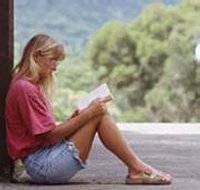 If you’re learning Spanish one of the worries that you’ll have is with the wide variety of accents that you’ll come across whilst you’re learning the language. Yet, native speakers can cope with them all so you should aim to do so as well.Fortunately you’ve an equally large range of Spanish schools around the world. For example, Spanish immersion Costa Rica offers a range of courses starting from one week up to six months which will naturally give you a chance to hear the Costa Rican accent.Won’t it be impossible to follow? Well, as it happens I ended up having a south American teacher for the intensive course that I did last year and settled into his accent in under a day so you don’t need to worry about it.
The other big plus point is that you get to pick up some of the local culture too. That’s an important part of learning any language and Spanish is very much an amalgam of cultures from everywhere.
Copyright © 2004-2014 by Foreign Perspectives. All rights reserved.It’s always warmer in the south of France than it is in the UK, isn’t it?
 Actually, no, it isn’t.
Obviously you can take it as read that it will be much warmer in the south of France during the Summer than it is in the UK but once you get into the December to February period it’s almost always the reverse situation that applies.
For instance, in the last week I was running around Belfast sweating with the heavy coat that you’d think would be required at this time of year in Northern Ireland yet in fact that coat is the one that you actually need in the south of France at the moment.
So, don’t just make the assumption that if it’s warmer somewhere in the Summer that it will be just as much warmer in the rest of the year because often it isn’t.
Copyright © 2004-2014 by Foreign Perspectives. All rights reserved.Accepting credit cards in a B&B
 Amazingly many B&Bs still don’t accept credit cards and thereby end up losing business as many people prefer to pay directly with a card than to have to pay extra charges to lift cash abroad.
But, how do you do it?
Well, there are basically two ways that a B&B or self-catering complex can operate with a credit card.
- Accept cards solely for deposits; and
- Accept cards for all payments.
Naturally, it’s possible to start off just taking card payments for deposits and move onto accepting them for all payments. In fact, it’s useful to do exactly this to try out card payments for your business.
If you’re only taking card payments for deposits then you don’t need to sign up with a bank. The simplest way is to sign up with paypal for a business account. Payments received will cost you 3.4% plus 20p so if you take £10 will cost you about 54p (5.4%), £100 will cost £3.60 (3.6%) and £1000 will cost £34.20 (3.42%). These charges are similar to those that a small business would pay were they to do credit card processing via their bank in the UK but somewhat higher than the typical 0.75% for banks in France.
From these figures you’ll see that it’s best to use paypal for deposits. That way a typical 25% deposit will effectively cost you under 1% of the total bill for paypal processing.
You could use paypal to accept all payments but you would need your bookings to be paid 100% in advance to do that as you can’t easily use the paypal system to make on the spot payments (if you really have to you can do it by having the guest logging in using your Internet access and making the payment). So, if you want to accept all payments by card, then you need to get the little credit card machine.
To get a credit card machine setup you need to have a business bank account and, in most cases, have had it for six months although for B&B and self-catering properties the bank will normally waive the six months requirement. In France, you’ll need to be registered and provide your KBIS.
Costs for this vary a lot. You can buy your own machine but they’re rather expensive (typically £300/‚€500) and therefore most people rent them from the bank (around £20/‚€30 per month). In most cases you’re better to opt for a fixed installation as the portable terminals can cost 50% more. Other things to consider are which cards you’ll accept. Normally Visa/Mastercard are sufficient (and will include Visa Electron and Maestro). American Express is becoming more popular but is usually more expensive than other cards. If you get a lot of Japanese then it’s probably worthwhile taking JCB. You can even accept various storecards but unless you’re in a shopping centre it’s probably not going to be worth the extra expense.
How do you do it? Open a business bank account then apply for the credit card facility at your bank.
One thing to watch is that you will need Customer Not Present enabled. This lets you charge cards without having the credit card in your hand. You’ll need this to take deposits.
Is it worthwhile doing though? Yes, it is. Sure it will cost you more but you can take that into account in your pricing. If you assume that a credit card payment will cost you 4% then adding as little as 2% to your prices will pay for it all in that not everyone will pay by card and many of those that do will use a debit card which’ll cost you less. So, if you’re charging £50/night that equates to adding £1 to your charges. Incidently, don’t try adding that £1 only to credit card customers as you’ll just end up driving them away.
Copyright © 2004-2014 by Foreign Perspectives. All rights reserved.How do you actually set up a blog?
How to get started is something that stops many people from running a blog to begin with or pushes them onto the relative deadend of one of the blogging sites.
However, it doesn’t need to be like that because it’s really quite easy to start a blog with your own domain and can cost as little as $45/£25 per year. Going down this route gives you a LOT more control over your blog.
Won’t it be terribly complicated? No, it’s pretty simple really and there’s a series on how to do it over on MumsFinance.com so I’ll not run through all the details here. The basic steps are:
- register a domain;
- sign up with a hosting service;
- install the blogging software;
- start writing your blog
You might think that step 3 is going to be very complex but it’s described in easy steps in the series.
To be fair, that’ll get you a very basic looking blog but it’s best to start simple. Once you’re happy that everything is working fine you can look around for different themes (the appearence) for your blog but it’s not essential to do that and many blogs run with the simple default theme.
Copyright © 2004-2014 by Foreign Perspectives. All rights reserved.

