Archive for the ‘Politics’ Category
 Posted in
How much influence will off-shore voters have in the French election?
 April 19th, 2007 |
  Author:
 One of the striking differences of this election vs previous ones is that there is an appreciation that a significant proportion of the French population lives overseas.
Of a total population of 53 million voters, an estimated minimum of 2 million are resident abroad. Now 4% or so might not sound like a very big proportion but critically, the political makeup of the overseas French is considered different from the political makeup of those remaining in France and, on the whole, they are more to the right than to the left. How come? Well, the typical left wing approach of bribing the electorate by increases in social security payments clearly won’t work with this group as they simply won’t receive them ie there is no pull towards the left for them. On the other side, they will, for the most part, be in countries that are more to the right than France is and can see a less socialist system actually working ie there is a pull to the right. Combine these and you get a drift to the right for this group as compared to the makeup of those remaining in France.
Surely, that doesn’t really matter as there aren’t really that many of them, are there? Whilst it’s true that the absolute numbers represent a mere 4% percent of the population compare this to the typical predictions of the share of the vote for each candidate: you’ve around 27%, around 25% and around 20% for the leading candidates. That means that only 2% percent can change the running order and that’s why those overseas voters are so important.
Consequently, we have the peculiar sight of a political rally in London conducted entirely in French.
Is it right that these people should be able to vote at all though? After all, some of these people have been abroad for 20 years or more. I’d question the validity of the vote of someone who has been living outside France for that long. What contact would they really have had with the issues affecting people who live in France? Would they even understand the issues after so long? Yes, some will, but the majority will not.
Copyright © 2004-2014 by Foreign Perspectives. All rights reserved.Will Bayrou shift the French political spectrum?
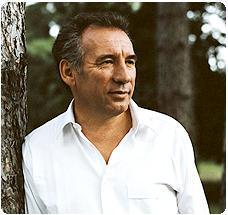 Although Bayrou appears to be in third place, the peculiarities of the two stage electoral process in France mean that he’s the candidate with the greatest potential majority in the second stage, assuming that he gets through the first stage of course. It seems that the candidates in France have had a similar analysis of the voting possibilities to our own and are adjusting their approaches accordingly.
As reported in the Financial Times, this has already had a considerable impact on socialist thinking with an unsigned manifesto in Le Point calling for quite a radical rethinking of socialist policies. In effect, this would represent the realignment of socialism in France that happened with socialism elsewhere in Europe some years ago. Will that realignment happen this time around? I suspect not as there seems very little time before the election now and I can’t really see such a change being one that the electorate would believe.
To an outsider Sarkozy doesn’t seem to need that radical shift in ideology required by Segolene in that he runs what appears to be a very modern party with equally up to date policies. A few weeks ago I thought that his approach would be a little too radical for France at this time but apparently not if the polls are to believed. It does seem though that it’s now even more important that he aims to knock Bayrou out of the race at this point.
What about Bayrou in all this? In many ways it seems as though he is likely to win not so much as a positive statement by the electorate but rather as a vote against the other two candidates which is, of course, exactly what happened last time around when Chriac came up against Le Pen in the second round. The difference this time around is that Bayrou seems to be a realistic possibility in the eyes of the electorate and perhaps we will be referring to him as President Bayrou in just a few months time. If they’re lucky perhaps he will even deliver that “third way” that the French often seem so keen on having but have never quite managed.
Copyright © 2004-2014 by Foreign Perspectives. All rights reserved.Would you bet on this horse-race?
 The French presidential election is a two stage process which creates almost a horse race approach to the presentation of statistics from the various polls.
Whilst Sarkozy is clearly the front runner and, to a UK audience, “obviously” he will win, that’s not quite so obvious as it might appear. If, as seems likely, the first stage vote doesn’t give Sarkozy over 50% of the vote then the top two polling candidates will proceed to the second stage of the voting.
As we write this, it seems certain that Sarkozy will get through to the second stage and let’s take that as read for the moment to simplify the rest of this discussion.
The second person who gets through is far from a sure thing at this point as the polls are indicating that Royal is sitting on 23% and Bayrou on 21%. Considering how polls work, it’s quite possible that the real position is, say, Royal on 21% and Bayrou on 23%. Yes, the polls indicate a margin of error which would exclude that but that’s before you consider the major problem that the pollsters face which is that those they ask sometimes say what “sounds good” rather than saying the way that they will actually vote. Some years ago this resulted in a totally incorrect prediction in the UK in the days when people thought that they should say they were going to vote Labour but they actually voted Conservative on election day.
In any event, the second position candidate could be either Royal or Bayrou which leaves us with two possibilities for the second round ie Sarkozy vs Royal or Sarkozy vs Bayrou.
Interestingly, the polls indicate that Sarkozy will only win if he is up against Royal in the second round and even then only by a small margin (2%). If he’s up against Bayrou, chances are that he’ll lose by a fairly large margin (10%). So, although Sarkozy has a comfortable 6% lead on Royal on the first round, he’s more likely to lose the second round than he is to win it.
I don’t know if they get into tactical voting in France, but if they do, it looks like it would be worthwhile for Sarkozy supporters to be encouraging Royal supporters and for Bayrou supporters to be encouraging Sarkozy supporters at this point.
Would you still bet on the outcome of the race?
Copyright © 2004-2014 by Foreign Perspectives. All rights reserved.Foreign Perspectives: As seen on TV
 Recently, France24 asked me (along with, no doubt, thousands of others) to contribute to a blog portraying the upcoming French presidential election as seen from the eyes of commentators overseas and I contributed my piece on Royal which they subsequently published. My article on Chirac even managed to hold its place as lead story on the site throughout March 12th and was picked up on their broadcasts too thus giving me my 2 seconds of fame.
What most impresses me about all this is that, seemingly for the first time, France is asking the rest of the world what they think of the events in France.
Obviously the presidential election is very much an internal matter for France. However, who the French president is matters outside France: how France reacts on the international stage will be very different depending on whether it’s Sarkozy, Royal or Bayrou as president. So it’s important that this election receives the exposure that it deserves worldwide and not just in France.
France24 itself seems symbolic of this new spirit of outreach through its decision to have a large proportion of its output in English and hopefully it will continue to reach out and pull us anglophones into its circle.
Copyright © 2004-2014 by Foreign Perspectives. All rights reserved.
Chirac: the end of an era
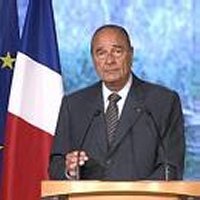 Chirac has presided over a range of fairly high profile controversies since beginning with his authorisation of the nuclear tests in the Pacific just after his election in 1995. Just two years later he tried to manipulate the electoral process by dissolving the parliament and forcing an election at an opportune time for his own party though, such was the opposition to this action, he ended up weakening his powerbase.
Unexpectedly facing Le Pen in the second round of elections in 2002, he naturally had a landslide victory. The defeat of the European constitution in 2005 was quite a blow both to him and other nations in Europe. As with the nuclear tests in 1995, he typically followed solely the interests of France in opposing the war with Iraq. Also seemingly typical of French politicians, he withdrew the proposed First Employment Contract (Contrat Première Embauche or CPE) in the face of widespread student protests against this move to make it easier to both hire and fire young people.
On the whole, I think he will be remembered as one of the most typically French politicians. He seemed to consider only the interests of France abroad and followed (on the whole) the desires (if not always the needs) of the French people within the country.
Although it seemed likely that he would lose the election had he stood this time around, he seemed to recognise in his speech that France needs a different type of leadership in the future, one that begins to consider more completely France’s place in Europe and that takes a firmer stand on necessary policy changes.
Copyright © 2004-2014 by Foreign Perspectives. All rights reserved.

